
Understanding the “Language” of Your Gum Health
Your dentist just called out a “5” or a “6” during your cleaning, and suddenly the tone in the room shifted. You may have heard a sequence like “3-3-4… 5-6-6,” and wondered—is that bad? Should I be worried?
At Bucks County Periodontics, with locations in Bensalem and Richboro, we believe those numbers shouldn’t feel cryptic or intimidating. They’re not random—they’re actually precise measurements that map the health of your gums. Think of them as the GPS coordinates of what’s happening beneath the surface.
In this guide, you’ll learn:
- What pocket depth numbers actually mean
- What’s considered healthy vs. concerning
- Why these measurements matter for long-term oral health
- What happens if pockets deepen—and how they can be treated
- When it’s time to see a specialist like Dr. Ryan Kaye
By the end, those numbers won’t feel like a mystery—they’ll feel like insight.
What Is a Periodontal Pocket?
The Space Between Your Tooth and Gum
A periodontal pocket is the small space between your tooth and the surrounding gum tissue. In a healthy mouth, this space is shallow and tightly sealed.
When your hygienist or dentist measures your gums, they use a small instrument called a periodontal probe to gently assess how deep that space goes.
- Shallow space = healthy attachment
- Deeper space = potential breakdown of support structures
This measurement is recorded in millimeters (mm)—typically ranging from 1mm to 10mm or more in advanced cases.
What Do the Numbers Actually Mean?
A Simple Breakdown of Pocket Depths
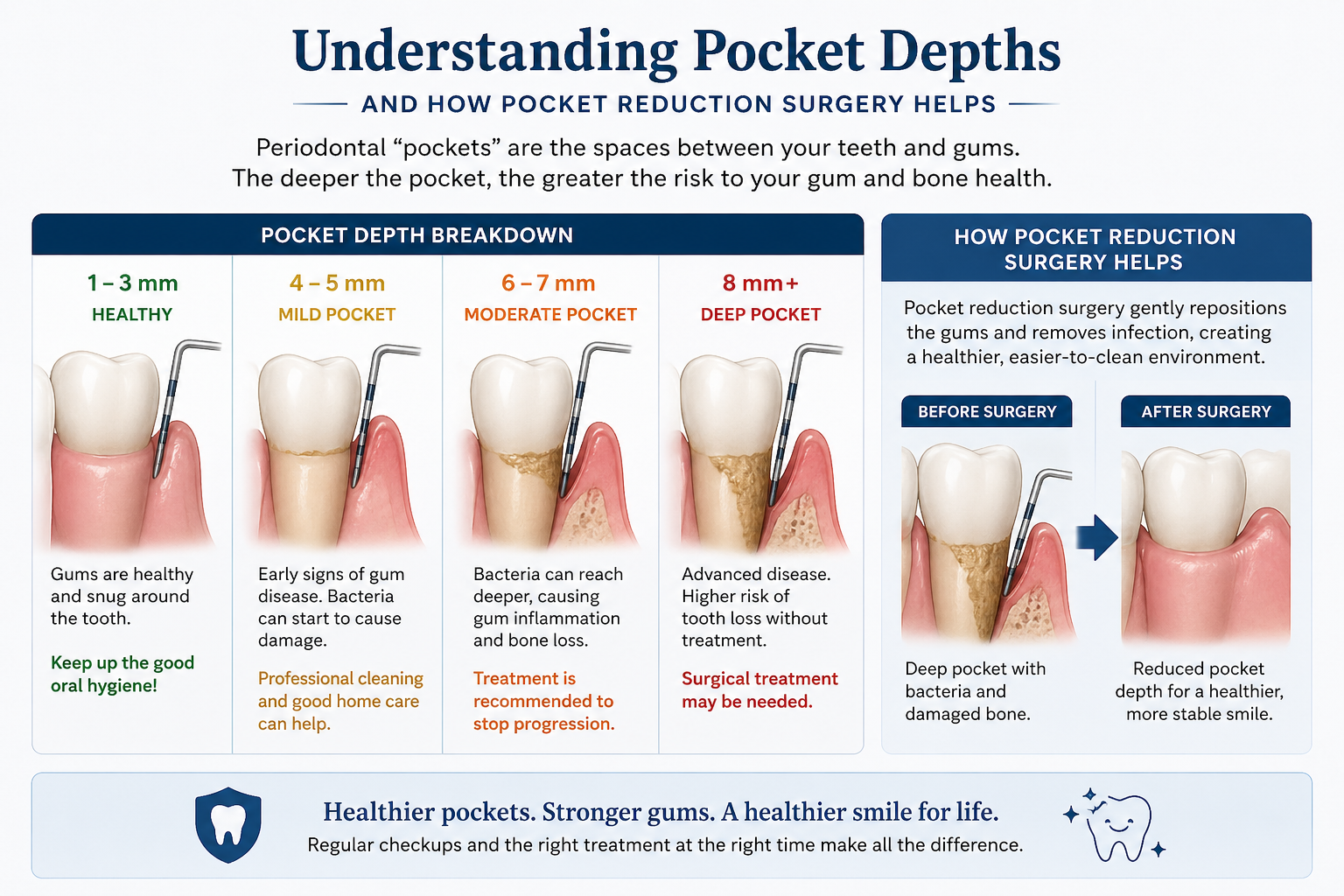
Here’s how to interpret what you’re hearing during your exam:
1–3 mm: Healthy Range
- Gums are snug around the tooth
- No significant inflammation or bone loss
- Easy to maintain with brushing, flossing, and routine cleanings
4 mm: Early Warning Zone
- Slight deepening of the pocket
- May indicate early gum inflammation (gingivitis) or mild periodontal changes
- Often manageable with improved hygiene and possibly Scaling & Root Planing
5–6 mm: Moderate Periodontal Disease
- Bacteria have moved deeper below the gumline
- Bone loss may be starting or progressing
- Professional intervention is typically recommended
7 mm and above: Advanced Periodontal Disease
- Significant breakdown of bone and supporting tissue
- Higher risk for tooth mobility or loss
- Advanced periodontal therapies are often required
Why Do Deeper Pockets Matter?
It’s Not Just About the Number—It’s About Access
The deeper the pocket, the harder it is to keep clean.
In shallow pockets (1–3 mm), your toothbrush and floss can effectively remove plaque. But once pockets deepen:
- Bacteria can accumulate beyond your reach
- Toxins begin to irritate and damage surrounding tissue
- The body’s inflammatory response can accelerate bone loss
This is why periodontal disease is often described as “silent”—you may not feel pain, but damage can still be progressing beneath the surface.
Why Was My Hygienist Calling Out So Many Numbers?
Full-Mouth Charting Explained
Each tooth is measured in six different locations:
- Three on the front (facial side)
- Three on the back (lingual side)
That’s why you might hear a rapid sequence like:
“3-4-5… 2-3-3… 6-6-5…”
This comprehensive mapping allows your provider to:
- Identify localized problem areas
- Track changes over time
- Customize your treatment plan with precision
What Causes Pockets to Get Deeper?
The Role of Bacteria and Inflammation
Periodontal pockets deepen when plaque and bacteria accumulate below the gumline and trigger inflammation.
Common contributing factors include:
- Inconsistent brushing and flossing
- Missed dental cleanings
- Smoking or tobacco use
- Genetic predisposition
- Systemic conditions like diabetes
Over time, this inflammation can lead to:
- Gum tissue detachment
- Bone loss around teeth
- Increased pocket depth
Can Deep Pockets Be Reversed?
Repair vs. Regeneration
This is one of the most important questions patients ask—and the answer depends on the severity of the condition.
Early Stages (4–5 mm)
- Often managed with Scaling & Root Planing
- Bacterial reduction allows gums to reattach and tighten
Moderate to Advanced (5–7+ mm)
- May require more advanced care such as:
In some cases, modern periodontal techniques can do more than stop progression—they can actually rebuild lost support structures.
This is where working with a specialist like Dr. Ryan Kaye becomes essential.
How Pocket Depth Relates to Tooth Loss and Implants
Why These Numbers Matter Long-Term
Pocket depth isn’t just about your gums—it directly impacts:
- Tooth stability
- Bone health
- Future treatment options
If periodontal disease progresses unchecked:
- Teeth may become loose
- Bone may deteriorate to the point where implants require Bone Grafting before placement
On the other hand, early intervention helps preserve:
- Your natural teeth
- Your bone structure
- Your eligibility for procedures like Dental Implant Therapy or All-On-X / Full-Arch Implants
What Happens After a “High Number” Is Found?
Your Next Steps, Explained Clearly
Hearing a “5” or “6” doesn’t mean something is wrong beyond repair. It means you’ve identified an area that needs attention.
At Bucks County Periodontics, your care is always personalized, but typical next steps may include:
1. Comprehensive Periodontal Evaluation
A deeper assessment of your gum health, bone levels, and risk factors.
2. Targeted Treatment Plan
This may include:
- Scaling & Root Planing
- Localized antimicrobial therapy
- Surgical or regenerative procedures if needed
3. Ongoing Periodontal Maintenance
More frequent cleanings to stabilize your condition and prevent progression.
You can learn more about this on our Periodontal Maintenance and Periodontal Disease Therapy pages.
Why a Periodontist Is the “Translator” You Need
Specialized Expertise Makes a Difference
General dentists and hygienists are excellent at identifying pocket depth changes—but a periodontist is trained to:
- Diagnose the cause of those changes
- Interpret what those numbers mean for your long-term health
- Offer advanced solutions to stabilize or rebuild your foundation
Dr. Ryan Kaye works closely with patients to:
- Break down complex findings into clear, understandable terms
- Recommend appropriate, evidence-based treatments
- Create a plan that aligns with your goals and comfort level
If you’ve ever left an appointment feeling unsure about what those numbers meant, you’re not alone—and you don’t have to stay in that uncertainty.
Frequently Asked Questions About Pocket Depth
“Is a 5mm pocket always bad?”
Not necessarily—but it does indicate a need for attention. With the right care, it can often be stabilized or improved.
“Can brushing fix deep pockets?”
Brushing is essential, but once pockets deepen beyond 4mm, professional treatment is typically required.
“Do deeper pockets always mean surgery?”
No. Many cases can be managed non-surgically, especially when caught early.
“How often should pocket depth be measured?”
At least once per year, or more frequently if you are in periodontal maintenance care.
How to Protect Your Gum Health Moving Forward
Practical, Actionable Steps
- Maintain consistent brushing and flossing habits
- Keep up with regular dental visits
- Follow through with recommended periodontal care
- Ask questions—understanding your numbers is part of your health
If you’ve recently heard unfamiliar numbers during your visit, the most important step is simple: get clarity.
A Final Word: Turning Numbers Into Confidence
Those numbers you hear during your dental visit aren’t something to fear—they’re something to understand.
They provide early insight into your gum health and give you the opportunity to act before problems progress. With the right guidance, they become less about uncertainty and more about control.
Schedule a Consultation at Bucks County Periodontics
If you’ve recently been told you have “4s,” “5s,” or “6s” and want a clearer understanding of what that means for your health, we’re here to help.
At our Bensalem and Richboro locations, Dr. Ryan Kaye and our team provide:
- Thoughtful, personalized evaluations
- Advanced periodontal care and regenerative solutions
- A supportive, patient-first experience focused on long-term outcomes
Whether you’re exploring preventive care, addressing active gum disease, or considering treatments like Gum Graft Surgery, Guided Bone & Tissue Regeneration, or Dental Implant Therapy, we’ll walk you through every step with clarity and care.
Schedule your consultation today and take the next step toward confident, informed oral health.