

Why Do I Need Cleanings Every 3 Months Instead of 6?
Life is busy, and we know six-month dental cleanings often feel like the standard. For many people with healthy gums, that twice-a-year schedule may be enough to maintain good oral health. But for patients with a history of periodontal disease, three months is often the “magic number” that keeps the bacterial infection under better control.
That recommendation is not about office preference. It is about biology. Periodontal disease is driven by bacteria that collect below the gumline, especially inside periodontal pockets. After professional periodontal therapy, those bacteria begin to repopulate. For many patients with a history of gum disease, waiting six months can give harmful bacteria enough time to rebuild, irritate the gum tissue, deepen pockets, and contribute to additional bone loss.
At Bucks County Periodontics, Dr. Ryan Kaye and our team recommend periodontal maintenance intervals based on each patient’s diagnosis, pocket depths, bleeding levels, bone support, home care, medical history, dental implant status, and long-term risk. For many patients, that means returning every three months for periodontal maintenance rather than a routine six-month dental cleaning.
The Short Answer: Periodontal Maintenance Is Not the Same as a Regular Cleaning
A regular dental cleaning, often called a prophylaxis, is generally designed for patients without active periodontal disease or significant bone loss. It focuses on removing plaque, tartar, and surface stains from teeth above the gumline and just slightly below it.
Periodontal maintenance is different. It is a therapeutic maintenance visit for patients who have been treated for periodontal disease or who remain at higher risk for disease recurrence. The goal is not simply to “clean the teeth.” The goal is to help control the bacterial environment below the gumline, monitor periodontal pockets, reduce inflammation, protect bone support, and maintain the results of previous periodontal treatment.
Periodontal disease affects the tissues that support the teeth, including the gums and surrounding bone. The CDC describes periodontal disease as involving inflammation and infection of the tissues that surround and support the teeth. Once those supporting structures have been affected, the maintenance strategy needs to be more precise.
That is why many patients are advised to come in every three months instead of every six.
Why Three Months Matters: The Biology of Bacterial Repopulation
The mouth naturally contains bacteria. That is normal. The concern is not the presence of bacteria alone, but the type, amount, and location of bacteria.
In periodontal disease, bacteria collect below the gumline and can live inside periodontal pockets. These pockets are spaces between the tooth and gum tissue that have deepened due to inflammation, attachment loss, or bone loss. The deeper the pocket, the harder it becomes to clean thoroughly at home with brushing and flossing alone.
After scaling and root planing, periodontal disease therapy, or other periodontal treatment, the bacterial load is reduced. The tooth roots are cleaned, deposits are removed, and the tissues are given a better opportunity to stabilize. But the mouth is not a sterile environment. Bacteria begin to recolonize almost immediately.
The three-month interval is designed to interrupt that process before the bacterial population becomes more organized and destructive again. For many patients with a history of periodontitis, the American Academy of Periodontology has described three-month periodontal maintenance intervals as effective for maintaining established gingival health, while also noting that frequency may be modified based on clinical findings and disease status.
In simpler terms: periodontal maintenance is timed to stay ahead of the infection cycle.
Why Six Months Can Be Too Long for Patients With Periodontal Disease
Six months can feel reasonable because it is familiar. Many patients grew up hearing, “See your dentist twice a year.” For patients with healthy gums, shallow pocket depths, minimal bleeding, and no history of periodontal breakdown, that may be appropriate.
But periodontal disease changes the equation.
When periodontal pockets are present, bacteria are not just sitting on visible tooth surfaces. They are living in deeper spaces below the gumline. These areas are more difficult to access with a toothbrush, floss, or even many home-care tools. Once bacteria reorganize in these pockets, they can contribute to inflammation and tissue breakdown.
A six-month gap may allow too much time for bacterial buildup to return to a level that increases the risk of bleeding, swelling, pocket deepening, bone loss, gum recession, tooth mobility, or implant-related complications.
This does not mean every patient with a history of gum disease must stay on a three-month schedule forever. Some patients stabilize very well. Others may need shorter intervals, such as every two to three months, depending on risk. The best schedule is personalized. But for many periodontal patients, three months is the clinical sweet spot between under-treating and over-treating.
“But My Teeth Feel Fine.” Why Symptoms Are Not Always a Reliable Guide
One of the most common misunderstandings about periodontal disease is that it should hurt if something is wrong.
In reality, periodontal disease can progress quietly. Gums may bleed only occasionally. Teeth may feel normal. Breath may seem fine. There may be no obvious discomfort at all. By the time a patient notices looseness, shifting, gum recession, or persistent tenderness, the disease may already have caused meaningful changes in the supporting bone.
This is why periodontal maintenance is proactive. We are not waiting for pain. We are monitoring subtle signs that tell us whether the gums and bone are stable.
During a periodontal maintenance visit, Dr. Ryan Kaye and our clinical team may evaluate pocket depths, bleeding on probing, gum recession, plaque control, calculus buildup, bite changes, tooth mobility, and dental implant health. These details help us understand whether the current maintenance interval is working or whether your care plan should be adjusted.
If your mouth feels fine, that is excellent. The purpose of three-month maintenance is to help keep it that way.
What Happens During a 3-Month Periodontal Maintenance Visit?
A periodontal maintenance visit is more detailed than a standard cleaning because the goals are different.
Review of Your Medical and Dental History
Your gums are connected to your overall health. Changes in medications, diabetes status, smoking or vaping habits, pregnancy, stress, immune health, and recent surgeries can all influence periodontal stability.
At each visit, your team may ask about health updates, new medications, changes in home care, sensitivity, bleeding, discomfort, or areas that feel harder to clean. This helps us tailor your care rather than treating every visit the same way.
Periodontal Evaluation
Your gum measurements help us track whether periodontal pockets are stable, improving, or worsening. Pocket depths are not just numbers on a chart. They tell us how accessible the tooth root surfaces are, how much support the tooth has, and whether inflammation may be active.
Bleeding on probing is also important. Bleeding does not automatically mean something severe is happening, but it can indicate inflammation in the gum tissue. In patients undergoing supportive periodontal therapy, higher levels of bleeding may signal the need for greater supportive care.
Removal of Plaque and Calculus Above and Below the Gumline
The maintenance cleaning focuses on removing bacterial deposits from areas that are difficult or impossible to clean thoroughly at home. This may include areas below the gumline, around exposed root surfaces, near crown margins, around bridges, and around dental implants.
Patients who have had scaling and root planing, periodontal disease therapy, pocket reduction surgery, guided bone and tissue regeneration, gum graft surgery, bone grafting, or dental implant therapy may need especially careful maintenance around previously treated areas.
Reinforcement of Home Care
Periodontal maintenance is not only what happens in the office. It is also an opportunity to refine what happens at home.
Your team may recommend specific techniques or tools, such as an electric toothbrush, interdental brushes, floss threaders, water flossers, antimicrobial rinses, or specialized cleaning aids for dental implants and bridges. These recommendations should feel practical, not overwhelming.
The goal is to help you clean more effectively between visits, especially in the areas most vulnerable to bacterial buildup.
The “Math” of Bacteria Growth: Why Timing Changes the Outcome
Think of periodontal maintenance like keeping weeds under control in a garden. If you remove them early and consistently, the work is manageable. If you wait too long, the roots spread, the soil changes, and the problem becomes harder to reverse.
Bacteria behave in a similar way. Early bacterial buildup is easier to disrupt. Over time, bacteria organize into more complex communities called biofilm. Once biofilm matures below the gumline, it becomes more resistant to casual brushing and rinsing.
Three-month periodontal maintenance helps interrupt the cycle before the bacterial environment becomes more favorable to inflammation. Six months can give that biofilm more time to mature in periodontal pockets.
This is why the recommendation is not arbitrary. It is based on the way periodontal bacteria return, reorganize, and interact with the gum tissue over time.
Can I Stretch My Appointments to Save Time or Money?
This is a completely understandable question. Between work, family, travel, insurance limitations, and out-of-pocket costs, it is natural to wonder whether you can delay a visit or return to a six-month schedule.
The honest answer is: sometimes, but only when your periodontal condition supports it.
For some patients, stretching maintenance visits may increase the risk of needing more involved treatment later. Skipping or delaying periodontal maintenance may allow inflammation to return, pockets to deepen, or calculus to build below the gumline. If disease becomes active again, the next step may not be a simple cleaning. It may require additional scaling and root planing, localized periodontal disease therapy, pocket reduction surgery, regenerative treatment, or other periodontal services.
From a long-term perspective, consistent maintenance is often the more conservative approach. It helps reduce the likelihood of larger interventions by addressing problems earlier.
If cost is a concern, we encourage patients to speak with our team about insurance and financial options. Our Insurance and Financial page can be a helpful internal resource for patients who want to understand benefits, payment planning, and how to stay consistent with recommended care.
Is a 3-Month Cleaning Forever?
Not always.
Periodontal maintenance intervals are personalized. Dr. Ryan Kaye may recommend three-month maintenance for a period of time and then reassess based on your stability. If your gums remain healthy, pocket depths are stable, bleeding is minimal, plaque control is strong, and your risk factors are well managed, your interval may be adjusted.
However, many patients with a history of periodontitis remain on a three-month schedule long term because it is what keeps their condition stable. That does not mean treatment has failed. In fact, it often means the maintenance plan is working.
A helpful way to think about it is this: periodontal disease can often be managed successfully, but it requires ongoing attention. Just as patients with certain medical conditions need regular monitoring, patients with a history of gum disease often benefit from a consistent periodontal maintenance rhythm.
The goal is not more appointments for the sake of more appointments. The goal is fewer surprises, fewer setbacks, and better long-term oral health.
Who Benefits Most From 3-Month Periodontal Maintenance?
Three-month periodontal maintenance may be recommended for patients who have:
A History of Periodontal Disease
If you have been diagnosed with periodontitis, your gums and supporting bone have already shown vulnerability to bacterial inflammation. Maintenance helps preserve the results of treatment and reduce the risk of recurrence.
Deep Periodontal Pockets
Patients with deeper pockets often have areas that are harder to clean at home. These spaces can collect bacteria below the gumline, making more frequent professional care important.
Bleeding or Inflammation
Bleeding gums can be a sign that the tissue is inflamed. If bleeding continues between visits, a three-month schedule may help monitor and control inflammation more effectively.
Bone Loss or Gum Recession
Bone loss and gum recession can expose root surfaces and create areas where plaque and calculus accumulate more easily. These changes often require more attentive maintenance.
Dental Implants
Dental implants need ongoing periodontal and peri-implant monitoring. While implants cannot get cavities, the tissues around them can become inflamed or infected. Patients with dental implants, All-On-X / Full-Arch Implants, or implant-supported restorations may benefit from a carefully structured maintenance plan.
Previous Periodontal Procedures
If you have had pocket reduction surgery, guided bone and tissue regeneration, bone grafting, gum graft surgery, aesthetic crown lengthening, or other periodontal procedures, maintenance helps protect the investment you have made in your oral health.
Medical or Lifestyle Risk Factors
Diabetes, smoking, vaping, immune conditions, dry mouth, certain medications, and inconsistent home care can increase periodontal risk. In these cases, maintenance intervals may need to be shorter or more closely monitored.
How Periodontal Maintenance Protects Dental Implants
Dental implants are one of the most important reasons to stay consistent with periodontal maintenance.
Implants are designed to function like replacement tooth roots, but the tissue around an implant is not identical to the tissue around a natural tooth. Bacteria can collect around implants, and inflammation around an implant can progress if it is not identified and treated early.
For patients who have received Dental Implant Therapy or All-On-X / Full-Arch Implants, maintenance visits may include evaluation of the gum tissue around implants, assessment of inflammation, review of home-care techniques, and careful cleaning around implant components.
This is especially important because implant complications are often easier to manage when detected early. Consistent maintenance supports the long-term health of the implant, the surrounding gum tissue, and the bone that supports it.
How 3-Month Maintenance Fits With Other Periodontal Services
Periodontal maintenance often follows active treatment. Depending on your diagnosis, your care plan may include one or more periodontal services before you transition into maintenance.
Scaling & Root Planing
Scaling and root planing is a non-surgical periodontal therapy that removes plaque and calculus from below the gumline and smooths root surfaces where bacteria collect. For many patients, this is the first major step in controlling periodontal infection.
After scaling and root planing, periodontal maintenance helps preserve the results and monitor how the gums respond.
Periodontal Disease Therapy
Periodontal disease therapy may include non-surgical treatment, localized therapy, home-care recommendations, and ongoing monitoring. Maintenance is the long-term support system that helps keep disease under control.
Pocket Reduction Surgery
If pockets remain too deep after non-surgical therapy, pocket reduction surgery may be recommended to improve access for cleaning and reduce areas where bacteria can accumulate. Maintenance after surgery is essential for protecting the surgical result.
Guided Bone & Tissue Regeneration
Regenerative procedures are designed to support the rebuilding of lost periodontal structures in carefully selected cases. Periodontal maintenance helps protect healing areas and monitor long-term stability.
Gum Graft Surgery
Gum grafting may be recommended for recession, root exposure, sensitivity, or tissue support. Maintenance helps protect the grafted area and reduce inflammation that could compromise the surrounding tissue.
Bone Grafting
Bone grafting may be part of periodontal or implant-related treatment. Ongoing care helps support the health of the surrounding tissues and the long-term treatment plan.
Aesthetic Crown Lengthening and Dental Cosmetic Therapy
Even when treatment has an aesthetic goal, gum health remains essential. A beautiful result depends on stable, healthy tissue. Maintenance helps protect both function and appearance.
These are all helpful internal linking opportunities for patients who want to learn more about specific periodontal services.
What You Can Do at Home Between 3-Month Visits
Your home care matters. Periodontal maintenance works best when professional care and daily habits support each other.
Start with consistent brushing twice a day, ideally with a technique that reaches the gumline without scrubbing aggressively. Clean between the teeth every day using floss, interdental brushes, or another tool recommended for your mouth. If you have implants, bridges, retainers, or areas of recession, ask which tools are best for those specific spaces.
Pay attention to bleeding, tenderness, persistent bad breath, gum swelling, food trapping, or changes in the way your teeth fit together. These signs do not automatically mean something serious is wrong, but they are worth mentioning at your next visit.
Most importantly, do not feel embarrassed if home care has been inconsistent. Many patients find certain areas difficult to clean. Our role is to help you find realistic tools and techniques that fit your life.
What If I Miss a 3-Month Visit?
If you miss a periodontal maintenance appointment, the best next step is to reschedule as soon as possible. One delayed visit does not mean everything is lost. It simply means we want to get you back on track before bacteria have more time to build up below the gumline.
If it has been longer than recommended, your visit may require a more detailed evaluation. Dr. Ryan Kaye and our team may assess whether your gums are still stable or whether additional periodontal therapy is needed.
The earlier you return, the more options we usually have to manage inflammation conservatively.
Why Your Maintenance Schedule Should Be Personalized
There is no single schedule that is right for every patient. Research has also recognized the importance of risk-based periodontal maintenance rather than assuming one interval fits everyone. A systematic review found that evidence for one specific recall interval for all patients is limited and that risk-based recommendations should be considered.
That is why your periodontal maintenance recommendation should be based on your mouth, not a generic rule.
At Bucks County Periodontics, your care plan may consider:
- Your periodontal diagnosis
- Current pocket depths
- Bleeding and inflammation
- Bone levels
- Gum recession
- Tooth mobility
- Dental implant status
- Previous periodontal treatment
- Home-care effectiveness
- Medical history
- Smoking or vaping history
- Comfort, schedule, and financial concerns
This personalized approach allows Dr. Ryan Kaye to recommend a maintenance interval that supports your long-term stability while respecting your real-life needs.
The Bottom Line: Three Months Is About Staying Ahead of Disease
If you have been told you need periodontal maintenance every three months, it is not because your mouth is “bad,” and it is not because you did something wrong. It means your periodontal history shows that your gums benefit from closer support.
Three-month maintenance is a practical, biologically informed way to manage the bacterial repopulation cycle in periodontal pockets. It helps keep inflammation under control, protects the bone and tissue that support your teeth, supports dental implant health, and allows small changes to be addressed before they become larger concerns.
Six-month cleanings may be the standard for many patients. But if you have a history of periodontal disease, your mouth may need a different schedule to stay stable.
Schedule Periodontal Maintenance in Bensalem or Richboro
Your periodontal maintenance schedule should give you clarity, confidence, and a realistic path forward. At Bucks County Periodontics, Dr. Ryan Kaye and our team provide advanced periodontal care in a supportive, patient-centered environment at our Bensalem and Richboro locations.
Whether you are managing a history of gum disease, protecting dental implants, maintaining results after scaling and root planing, or simply trying to understand why three-month cleanings have been recommended, we are here to help you make informed decisions about your long-term oral health.
To learn more, visit our Periodontal Maintenance page, explore our Periodontal Disease Therapy and Scaling & Root Planing services, or contact our team to schedule an appointment at the Bensalem or Richboro office. We will help you understand your diagnosis, review your options, and create a maintenance plan designed around your health, comfort, and long-term stability.


The Systemic Connection: How Cleanings Protect Your Heart and Brain
Did you know that your mouth is the gateway to your body? Emerging research continues to show a meaningful connection between periodontal health and whole-body wellness, including cardiovascular health, brain health, immune response, and systemic inflammation. A professional cleaning at Bucks County Periodontics does more than polish your teeth. It helps reduce harmful bacterial buildup, control gum inflammation, and support a healthier foundation for your entire body.
For many patients, routine dental cleanings can feel easy to postpone—especially when nothing hurts. But gum disease often develops quietly. By the time symptoms become obvious, inflammation may already be affecting the tissues that support your teeth. For patients with a history of periodontal disease, dental implants, gum recession, deep pockets, or ongoing oral inflammation, professional periodontal maintenance is not simply “extra cleaning.” It is a preventive health strategy.
In this article, we’ll explain why your dentist or periodontist may be so persistent about cleanings, how gum health connects to the heart and brain, what happens during a professional periodontal cleaning, and how personalized care at Bucks County Periodontics can help you protect your smile and your long-term wellness.
Why Oral Health Matters Beyond Your Teeth
Your mouth is home to hundreds of types of bacteria. Many are harmless or even helpful. Others, when allowed to collect around the teeth and gums, can contribute to plaque, tartar, gum inflammation, and periodontal disease.
The Centers for Disease Control and Prevention describes periodontal disease as inflammation and infection of the gum and bone tissues that surround and support the teeth. Gingivitis, the earliest stage, involves gum inflammation and is often reversible with strong home care and professional cleaning. Periodontitis is more advanced and can damage the supporting structures around the teeth if not treated appropriately.
That distinction matters because gum inflammation is not isolated from the rest of the body. The gums have a rich blood supply. When periodontal pockets become inflamed or infected, bacteria and inflammatory byproducts may interact with the bloodstream and immune system. This does not mean gum disease directly causes every systemic condition it is associated with. Medical research is careful about separating association from causation. However, major dental and medical organizations recognize that periodontal disease is associated with several systemic health concerns, including heart disease and diabetes.
For patients, the practical takeaway is simple: caring for your gums is part of caring for your body.
Understanding the Mouth-Body Connection
The phrase “mouth-body connection” refers to the relationship between oral inflammation and overall health. Periodontal disease is not just a local dental issue. It is a chronic inflammatory condition that can place ongoing demand on the immune system.
How Gum Inflammation Begins
Plaque forms naturally on the teeth each day. When plaque is not removed thoroughly through brushing, flossing, and professional cleanings, it can harden into tartar, also called calculus. Tartar cannot be removed with a toothbrush or floss at home.
As tartar accumulates near or below the gumline, the gums may become irritated and inflamed. Over time, the gum tissue can begin to pull away from the teeth, creating periodontal pockets. These pockets trap more bacteria and become harder to clean without professional care.
Common signs of gum inflammation may include:
- Bleeding when brushing or flossing
- Red, swollen, or tender gums
- Persistent bad breath
- Gum recession
- Sensitivity near the gumline
- Loose or shifting teeth
- A change in how your bite feels
Some patients have very few symptoms, which is why consistent periodontal evaluation is so important.
How Oral Bacteria Can Affect the Body
When gum tissue is inflamed, the body responds by activating the immune system. That response is helpful in the short term. But when inflammation becomes chronic, it may contribute to a higher systemic inflammatory burden.
Research into oral-systemic health has explored several possible pathways, including:
- Bacteria entering the bloodstream through inflamed gum tissue
- Immune-system signaling that contributes to inflammation in other areas of the body
- Shared risk factors, such as smoking, diabetes, stress, diet, and age
- The role of periodontal bacteria in vascular and neurological health
The American Dental Association notes that periodontal disease has been associated with a number of systemic conditions, while also emphasizing that direct causality remains difficult to prove. This balanced view is important. We should not overstate what cleanings can do, but we also should not underestimate the value of reducing chronic oral inflammation.
Periodontal Health and Heart Health
The connection between gum disease and cardiovascular health is one of the most widely studied areas of oral-systemic research.
Cardiovascular disease is complex. It can involve genetics, blood pressure, cholesterol, diabetes, smoking history, diet, physical activity, stress, and many other factors. Periodontal care is not a replacement for medical care, cardiology evaluation, or heart-healthy lifestyle changes. However, gum health may be one meaningful part of a broader preventive approach.
The American Heart Association has reported that numerous studies have found periodontal disease associated with increased risk of major cardiovascular conditions, including heart attack, stroke, atrial fibrillation, heart failure, peripheral artery disease, chronic kidney disease, and cardiac death. The AHA also emphasizes that a direct cause-and-effect relationship has not been confirmed.
For patients, this means the goal is not to treat cleanings as a guaranteed way to prevent heart disease. The goal is to reduce a modifiable source of inflammation and bacterial burden that may be relevant to overall wellness.
Why the Gums and Arteries May Be Connected
One leading theory involves inflammation. Periodontal disease is a chronic inflammatory condition. Cardiovascular disease, particularly atherosclerosis, also involves inflammatory processes within blood vessels.
When gum inflammation is active, inflammatory markers may increase. Bacteria from periodontal pockets may also enter circulation during everyday activities such as chewing or brushing. Researchers continue to study how these bacteria and inflammatory signals may interact with blood vessel health.
A 2025 American Heart Association scientific statement summarized evidence supporting an association between periodontal disease and atherosclerotic cardiovascular disease, while identifying remaining gaps in the research. This is exactly why periodontal care is best understood as part of total health maintenance—not a standalone medical cure, but an important piece of a larger wellness picture.
Why Professional Cleanings Matter for Heart-Conscious Patients
Professional cleanings help remove plaque and tartar that daily home care cannot fully address. For patients with periodontal disease, cleanings may also involve deeper instrumentation around the gumline and below the gumline to disrupt bacterial colonies and reduce inflammation.
At Bucks County Periodontics, patients may be recommended for Periodontal Maintenance after active gum disease therapy, Scaling & Root Planing, Pocket Reduction Surgery, Guided Bone & Tissue Regeneration, or other periodontal treatments. The purpose is to keep bacterial buildup under control and help maintain the stability achieved through treatment.
If you have a history of heart disease, diabetes, high blood pressure, stroke, or other systemic health concerns, it is especially important to share your complete medical history during your visit. Dr. Ryan Kaye can consider your oral health in context and personalize recommendations around your periodontal needs.
Periodontal Health and Brain Health
Brain health is another area where oral-systemic research is growing. Patients often ask whether gum disease is linked to dementia, Alzheimer’s disease, or cognitive decline. The most accurate answer is that research has found associations, but the science is still evolving.
The National Institute on Aging has reported on a large study linking gum disease bacteria with dementia risk, noting that bacteria associated with gum disease were also associated with the development of Alzheimer’s disease and related dementias. A 2024 review also described periodontal disease as associated with dementia risk factors such as cardiovascular disease and diabetes.
Again, this does not mean gum disease directly causes dementia. Brain health is influenced by many factors, including age, genetics, vascular health, metabolic health, sleep, movement, nutrition, education, social connection, and medical history. But the mouth may be one more modifiable area worth caring for consistently.
How Gum Inflammation May Relate to Cognitive Health
Researchers are studying several possible links between periodontal disease and brain health:
- Chronic inflammation may contribute to inflammatory activity elsewhere in the body.
- Periodontal bacteria or their byproducts may influence immune responses.
- Gum disease shares risk factors with cognitive decline, including diabetes and cardiovascular disease.
- Tooth loss and reduced chewing function may affect nutrition, quality of life, and overall health behaviors.
For patients, the empowering message is that oral health is one area where daily habits and professional maintenance can make a measurable difference. You cannot control every risk factor for cognitive decline, but you can take steps to reduce oral inflammation, preserve your teeth, protect dental implants, and maintain a healthier oral environment.
Why Regular Cleanings Are Not “Just a Polish”
Many patients think of cleanings as cosmetic appointments. While cleanings can leave your teeth feeling smoother and brighter, the clinical purpose goes much deeper.
A professional dental cleaning or periodontal maintenance visit may include:
- Removal of plaque and tartar from the teeth and gumline
- Cleaning around periodontal pockets
- Evaluation of gum bleeding, inflammation, and pocket depths
- Assessment of gum recession and bone support
- Monitoring of dental implants, crowns, bridges, or restorations
- Review of home care techniques
- Identification of areas that need additional periodontal therapy
For patients with healthy gums, routine preventive cleanings help maintain oral health. For patients with periodontal disease, periodontal maintenance is an ongoing therapeutic service designed to manage a chronic condition.
The Difference Between a Routine Cleaning and Periodontal Maintenance
A routine cleaning is generally appropriate for patients without active periodontal disease. It focuses on removing plaque, tartar, and stain from the teeth above and slightly below the gumline.
Periodontal maintenance is different. It is usually recommended after a patient has been diagnosed with periodontitis and completed active treatment such as Scaling & Root Planing or Periodontal Disease Therapy. These visits are more targeted. They focus on controlling bacterial buildup in areas where periodontal disease has previously caused pocketing, inflammation, or tissue damage.
Periodontal disease is often chronic. That means it can be stabilized, but it requires ongoing management. Skipping maintenance visits may allow bacteria to recolonize deeper pockets, increasing the risk of recurrent inflammation.
Why Some Patients Need Cleanings More Often
Many patients are familiar with the “twice a year” dental cleaning schedule. That schedule works well for many people, but it is not ideal for everyone.
Patients with a history of periodontal disease may need maintenance every three to four months. This interval is often recommended because periodontal bacteria can repopulate below the gumline between visits. More frequent care helps interrupt that cycle before inflammation becomes more advanced.
You may benefit from more frequent periodontal maintenance if you have:
- A history of periodontitis
- Deep periodontal pockets
- Bleeding gums
- Gum recession
- Diabetes or other inflammatory health conditions
- Dental implants
- A history of smoking or tobacco use
- Bone loss around teeth
- Previous gum grafting, bone grafting, or regenerative therapy
- Difficulty cleaning certain areas at home
At Bucks County Periodontics, recommendations are personalized. Patients are evaluated based on gum measurements, inflammation, medical history, dental history, home care, risk factors, and long-term goals.
Cleanings, Dental Implants, and Long-Term Stability
If you have dental implants, maintenance is especially important. Implants cannot get cavities, but the tissues around them can become inflamed or infected. This condition is often called peri-implant disease.
Just like natural teeth, dental implants require healthy surrounding gum and bone support. Bacterial buildup around implants may contribute to inflammation, pocketing, and bone loss if not identified and managed early.
Patients who have completed Dental Implant Therapy, All-On-X / Full-Arch Implants, Bone Grafting, or Guided Bone & Tissue Regeneration should think of maintenance as part of protecting their investment. Implant treatment is not complete the day the restoration is placed. Long-term success depends on ongoing monitoring, strong home care, and professional maintenance.
During periodontal maintenance, the team can assess implant tissue health, clean around implant-supported restorations using appropriate instruments, check for signs of inflammation, and recommend changes to home care tools when needed.
What to Expect During a Periodontal Maintenance Visit
A periodontal maintenance visit is designed to be thorough, preventive, and supportive. If you feel anxious about dental care, it may help to know what the appointment typically involves.
Review of Your Health History
Your medical history matters. Changes in medications, recent surgeries, new diagnoses, pregnancy, diabetes management, cardiovascular concerns, and immune-related conditions can all influence periodontal health and treatment planning.
Be open about any changes since your last visit. This helps Dr. Ryan Kaye and the Bucks County Periodontics team tailor your care appropriately.
Gum and Pocket Evaluation
The team may measure periodontal pockets around your teeth and implants. These measurements help track whether gum health is stable, improving, or showing signs of renewed inflammation.
Bleeding, swelling, recession, tooth mobility, and changes in bone support may also be evaluated.
Professional Removal of Plaque and Tartar
The cleaning portion removes bacterial deposits from areas you cannot fully reach at home. For periodontal patients, this may include careful cleaning below the gumline and around deeper pocket areas.
The goal is not simply to make the teeth feel clean. The goal is to reduce bacterial load, calm inflammation, and support healthier tissue attachment.
Personalized Home Care Guidance
Patients often feel guilty when they are told to brush or floss more. At Bucks County Periodontics, the better approach is clarity, not shame.
Your home care recommendations may include:
- A modified brushing technique
- Interdental brushes
- Floss threaders
- Water flossing
- Antimicrobial rinses when appropriate
- Implant-specific cleaning tools
- Tips for cleaning around bridges, crowns, or full-arch restorations
Small improvements in daily technique can make a major difference over time.
When Scaling & Root Planing or Periodontal Therapy May Be Needed
Sometimes, a maintenance cleaning is not enough to control active periodontal disease. If inflammation, bleeding, deep pockets, or tartar below the gumline are significant, Dr. Ryan Kaye may recommend Scaling & Root Planing or other Periodontal Disease Therapy.
Scaling and root planing is often described as a deep cleaning, but that phrase does not fully capture the clinical purpose. The treatment removes plaque and tartar from below the gumline and smooths root surfaces so the gum tissue can heal more effectively.
For some patients, additional procedures may be needed to address advanced pocketing, gum recession, bone defects, or tissue loss. These may include:
- Pocket Reduction Surgery to reduce areas where bacteria collect
- Gum Graft Surgery to treat recession and protect exposed roots
- Guided Bone & Tissue Regeneration to support lost periodontal structures in select cases
- Bone Grafting when bone support needs to be rebuilt or prepared for implants
- Aesthetic Crown Lengthening when gum contour affects function or appearance
- Dental Cosmetic Therapy when periodontal health and smile esthetics overlap
The right treatment depends on diagnosis. That diagnosis is personalized at the Bensalem and Richboro offices.
Common Patient Questions About Cleanings and Systemic Health
“Can a Cleaning Really Help My Whole Body?”
A cleaning is not a cure for heart disease, dementia, diabetes, or any systemic condition. But it can help reduce oral inflammation and bacterial buildup, which may lower one source of inflammatory burden in the body.
Think of periodontal maintenance like other wellness habits. It works best as part of a larger pattern: medical care, movement, nutrition, sleep, stress management, medication adherence when prescribed, and preventive screenings.
“Why Do My Gums Bleed If I Brush Every Day?”
Bleeding gums are often a sign of inflammation. Even with daily brushing, plaque can remain between teeth, below the gumline, or around crowded areas, dental work, implants, or deep pockets. Tartar buildup also cannot be removed at home.
If your gums bleed regularly, it is worth scheduling an evaluation. Early intervention is usually more comfortable, more conservative, and more predictable than waiting.
“Why Am I Being Asked to Come Every Three or Four Months?”
If you have a history of periodontitis, your gums may need more frequent professional support. Three- or four-month maintenance intervals help disrupt bacterial buildup before inflammation has more time to progress.
This is not about doing more than necessary. It is about matching your care interval to your risk level.
“Will Insurance Cover Periodontal Maintenance?”
Coverage varies by plan. Some dental insurance plans distinguish between routine cleanings and periodontal maintenance. Others may limit the number of visits covered per year.
The Insurance and Financial page can help patients better understand payment options, coverage questions, and financial planning. The Bucks County Periodontics team can also help you review how recommended care may fit within your benefits.
“What If I’m Nervous About What You’ll Find?”
You are not alone. Many patients delay care because they worry about judgment, discomfort, or cost. The best first step is simply getting clear information.
A periodontal evaluation does not obligate you to a specific treatment. It gives you a diagnosis, a better understanding of your options, and a path forward. At Bucks County Periodontics, the goal is to help patients feel informed and supported—not overwhelmed.
How to Support Gum Health Between Visits
Professional maintenance is essential, but your daily habits matter too. The most effective periodontal care combines in-office treatment with consistent home care.
Brush Thoroughly Twice a Day
Use a soft-bristled toothbrush and focus along the gumline. Gentle, consistent brushing is more effective than aggressive scrubbing.
Clean Between the Teeth Daily
Floss is helpful for many patients, but it is not the only option. Interdental brushes, floss picks, water flossers, and threaders may be better suited for certain mouths, especially around implants, bridges, or wider spaces.
Pay Attention to Bleeding or Changes
Bleeding, swelling, gum recession, persistent bad breath, loose teeth, or discomfort around implants should not be ignored. These signs do not always mean something serious is happening, but they do deserve evaluation.
Manage Health Conditions That Affect the Gums
Diabetes, tobacco use, dry mouth, stress, immune conditions, and certain medications can affect periodontal health. Share updates with your periodontal team so your care plan stays accurate.
Keep Your Recommended Maintenance Schedule
Once gum disease has been diagnosed, consistency is one of the most important parts of long-term stability. Maintenance visits allow the team to identify subtle changes before they become more complex.
Why Choose Bucks County Periodontics for Periodontal Maintenance?
Periodontal care requires a detailed understanding of gum tissue, bone support, dental implants, inflammation, and long-term disease management. At Bucks County Periodontics, patients receive specialized care focused on preserving oral health and supporting overall wellness.
Patients benefit from:
- Advanced periodontal evaluation and diagnosis
- Personalized maintenance intervals
- Care for natural teeth and dental implants
- Treatment planning for gum disease, recession, bone loss, and implant needs
- Supportive education without judgment
- Convenient care at both the Bensalem and Richboro locations
You may also want to explore the About or Meet the Team page to learn more about Dr. Ryan Kaye and the practice’s approach to patient-centered periodontal care. For patients comparing treatment options, the Periodontal Maintenance, Periodontal Disease Therapy, Scaling & Root Planing, and Dental Implant Therapy pages are especially helpful internal resources.
A Healthier Mouth Supports a Healthier Future
Cleanings are often described as preventive dental care, but for many patients, they are much more than that. They are part of a long-term strategy to reduce inflammation, preserve gum and bone support, protect dental implants, and support whole-body wellness.
Your mouth is connected to your body through the bloodstream, immune system, and inflammatory pathways. While periodontal care cannot promise protection from heart disease, stroke, dementia, or other systemic conditions, it can help manage one important and modifiable source of chronic inflammation.
That is why your dentist or periodontist keeps encouraging you to stay consistent. Not because they are focused only on your teeth—but because your oral health is part of your overall health.
Schedule Periodontal Maintenance in Bensalem or Richboro
If it has been a while since your last cleaning, or if you have been told you have gum disease, bleeding gums, bone loss, gum recession, or dental implants that need ongoing care, Bucks County Periodontics is here to help.
Dr. Ryan Kaye and the team provide advanced periodontal care in a warm, supportive environment, with personalized diagnosis and treatment planning at both the Bensalem and Richboro offices.
To protect your long-term oral health and support your overall wellness, schedule a periodontal maintenance visit with Bucks County Periodontics today. Your future smile—and your whole-body health—deserve thoughtful, consistent care.

Fighting Biofilm: Why Home Brushing Can’t Remove Tartar
You’re doing everything right at home—brushing, flossing, rinsing, and paying attention to your oral health—but you’re still being asked to return for regular periodontal maintenance. That can feel confusing at first. If you are consistent with your daily routine, why would you still need professional care?
The answer comes down to one important difference: soft plaque can often be disrupted at home, but hardened tartar cannot be brushed or flossed away once it has formed. Tartar, also called dental calculus, is mineralized bacterial buildup that bonds firmly to the tooth surface and can collect above and below the gumline. Once it is attached, professional instruments are needed to remove it safely and effectively.
At Bucks County Periodontics, Dr. Ryan Kaye and our clinical team see home care and professional periodontal care as partners—not competitors. Your brushing and flossing are essential for prevention. Professional scaling, periodontal maintenance, and deeper therapies are what help correct buildup, disrupt bacteria in hard-to-reach areas, and support long-term gum, bone, and tooth health.
Plaque, Biofilm, and Tartar: What Is the Difference?
To understand why brushing cannot remove tartar, it helps to first understand what is happening on the tooth surface every day.
Plaque Is a Soft, Sticky Biofilm
Dental plaque is a soft, sticky film made up of bacteria, saliva, food particles, and bacterial byproducts. It forms naturally on the teeth throughout the day, especially along the gumline and between the teeth.
In its early stage, plaque is soft enough to be disturbed by consistent brushing and flossing. This is where your home care routine does its most important work. Brushing helps remove plaque from the visible surfaces of your teeth, while flossing helps clean between teeth and just under the edge of the gumline.
Plaque is not a sign that you are doing something wrong. It forms in every mouth. The goal is not to create a bacteria-free environment, but to prevent harmful bacterial communities from becoming organized, mature, and inflammatory.
Biofilm Is Bacteria Working Together
The word “biofilm” refers to bacteria living together in a structured community. In the mouth, that biofilm can become more resistant as it matures. Bacteria are not simply floating around loosely; they can attach to surfaces, communicate, protect themselves, and create a sticky matrix that helps them stay in place.
That is why oral hygiene is about disruption. Brushing and flossing break up the biofilm before it becomes more organized. When plaque sits undisturbed, however, it can harden into tartar.
Tartar Is Hardened Plaque
Tartar, or calculus, forms when minerals in saliva combine with plaque and cause it to harden. Once plaque mineralizes, it becomes a rough, firmly attached deposit. At that point, a toothbrush cannot remove it. Floss cannot cut through it. Mouthwash cannot dissolve it.
This is the key distinction for patients: home care helps prevent tartar from forming, but it cannot remove tartar that has already hardened.
That does not mean your home care is failing. It means tartar has crossed from a prevention issue into a professional-care issue.
Why Your Toothbrush Cannot Remove Tartar
A toothbrush is designed to clean the tooth surface and disturb soft plaque. It is not designed to break apart mineralized deposits that have bonded to enamel or root surfaces.
Tartar Bonds Firmly to the Tooth
Once tartar forms, it attaches tightly to the tooth. It can feel like a rough ledge, ridge, or crusty area near the gumline. Some tartar may be visible as yellow, tan, or brown buildup. Other tartar forms below the gumline, where you cannot see it.
Trying to scrub tartar away with more pressure usually does not work. In fact, aggressive brushing can irritate the gums, contribute to recession, and wear at the tooth surface without removing the calculus.
Professional scaling uses specialized instruments to carefully remove hardened deposits. Depending on your needs, this may include hand instruments, ultrasonic scalers, or both. These tools are designed to remove tartar from areas that home tools cannot safely or predictably reach.
Tartar Creates a Rough Surface Where More Bacteria Can Collect
Tartar is not just a passive buildup. Its rough surface can make it easier for more plaque and bacteria to accumulate. This creates a cycle: plaque hardens into tartar, tartar creates a rougher surface, and the rough surface allows more biofilm to collect.
This is one reason professional cleanings and periodontal maintenance matter so much. Removing tartar does more than polish the teeth. It changes the environment around the gums, making it easier for you to maintain cleaner surfaces at home.
Below-the-Gum Tartar Is Especially Difficult to Reach
Tartar above the gumline is called supragingival calculus. Tartar below the gumline is called subgingival calculus. Subgingival tartar is often more concerning because it sits in the periodontal pocket, close to the tissues and bone that support the teeth.
When periodontal pockets deepen, bacteria and tartar can collect in areas where toothbrush bristles and floss cannot fully access. Even a very diligent patient may not be able to clean the base of a deep pocket at home. That is where periodontal therapy becomes important.
What Are Periodontal Pockets?
A periodontal pocket is the space between the tooth and gum tissue. In a healthy mouth, this space is shallow and easier to keep clean. When gum inflammation or periodontal disease is present, the tissue can pull away from the tooth, creating a deeper pocket.
Why Pocket Depth Matters
Pocket depth is measured in millimeters during a periodontal evaluation. These measurements help Dr. Ryan Kaye understand how the gums are adapting around each tooth and whether bacteria may be collecting below the gumline.
Deeper pockets can create a protected environment for bacteria. When bacteria remain undisturbed in these spaces, they may contribute to ongoing inflammation, bleeding, gum recession, bone loss, and changes in tooth stability.
This is why periodontal care is so personalized. Two patients may both brush and floss well, but one may have shallow pockets that are manageable with routine care, while another may need scaling and root planing, periodontal maintenance, or additional therapy to address deeper bacterial buildup.
Why Deep Pockets Need Professional Disruption
A toothbrush can clean the visible surfaces of the teeth. Floss can clean between teeth and slightly below the gumline. But when pocketing is deeper, home tools may not reach the full depth of the pocket.
Professional periodontal instruments are designed to access these areas more effectively. The goal is to remove tartar, disrupt bacterial biofilm, and create a healthier environment so the gum tissue can respond.
For patients with active periodontal concerns, this may involve Scaling & Root Planing. For patients who have already completed periodontal therapy, ongoing Periodontal Maintenance may be recommended to help manage the condition over time.
Why Periodontal Maintenance Is Different From a Routine Cleaning
Many patients hear “cleaning” and assume all cleanings are the same. In periodontal care, there is an important difference between a routine dental cleaning and periodontal maintenance.
Routine Cleanings Focus on Prevention
A routine cleaning is typically appropriate for patients without active periodontal disease or significant pocketing. It focuses on removing plaque, tartar, and surface stain from the teeth above the gumline and slightly below it.
Routine preventive cleanings are important, but they are not always sufficient for patients with a history of gum disease.
Periodontal Maintenance Focuses on Disease Control
Periodontal maintenance is designed for patients who have had periodontal disease or periodontal therapy. It is more targeted and may involve deeper cleaning around areas with previous pocketing, bone loss, gum recession, or difficult anatomy.
The purpose is not only to clean the teeth. It is to help manage a chronic condition, monitor tissue response, and reduce bacterial buildup in areas that are more vulnerable.
At Bucks County Periodontics, periodontal maintenance may be recommended at intervals based on your diagnosis, risk factors, pocket depths, home care, and treatment history. Some patients benefit from maintenance every three to four months rather than every six months, especially when deeper pockets or a history of periodontitis are present.
“But I Brush and Floss Every Day.” Why Tartar Still Forms
This is one of the most common and understandable questions patients ask.
Daily brushing and flossing significantly reduce plaque buildup, but several factors can still make tartar more likely to form.
Saliva Chemistry Plays a Role
Some people naturally develop tartar more quickly than others because of the mineral content and flow of their saliva. This does not mean they are careless. It means their oral environment mineralizes plaque faster.
Tartar often forms near the salivary glands, especially behind the lower front teeth and near the upper molars. These areas are common collection points even for patients with strong home care habits.
Crowding and Tooth Position Can Make Cleaning Harder
When teeth overlap, rotate, or sit tightly together, plaque can hide in areas that are harder to reach. These spaces may trap bacteria and make it more difficult for floss or brush bristles to fully clean the surface.
Gum Recession Can Expose Root Surfaces
Root surfaces are different from enamel. They can be more vulnerable to plaque retention and sensitivity. When recession is present, cleaning may require a more customized approach. Some patients may benefit from specialized home care tools, while others may need evaluation for Gum Graft Surgery if recession is significant or progressing.
Dental Restorations and Implants Require Specialized Care
Crowns, bridges, dental implants, and full-arch restorations can all be maintained successfully, but they require careful cleaning. Bacteria can collect around restoration margins, implant components, and prosthetic contours.
For patients with Dental Implant Therapy or All-On-X / Full-Arch Implants, professional maintenance is especially important. Dental implants cannot develop cavities, but the gum and bone around them still need to stay healthy. Inflammation around implants can become a serious concern if bacterial buildup is not addressed early.
Medical and Lifestyle Factors Can Affect Gum Health
Certain health conditions, medications, tobacco use, stress, dry mouth, and changes in immune response can influence gum health. Periodontal disease is not simply a brushing problem. It is a bacterial, inflammatory, and host-response condition.
That is why a personalized diagnosis matters. Dr. Ryan Kaye evaluates the whole clinical picture, not just whether a patient brushes and flosses.
What Happens If Tartar Is Left in Place?
Tartar can contribute to a less healthy environment around the gums. The concern is not the deposit alone, but the way it supports bacterial buildup and inflammation.
Gum Inflammation
When plaque and tartar collect near the gumline, the gums may become red, swollen, tender, or more likely to bleed. Bleeding during brushing or flossing is common, but it is not something to ignore. It often means the tissue is inflamed and needs attention.
Periodontal Disease Progression
If inflammation extends deeper into the supporting structures around the teeth, periodontal disease can progress. This may involve deeper pockets, gum recession, and bone loss around the teeth.
The goal of periodontal care is to identify these changes early and treat them appropriately. In some cases, non-surgical therapy such as scaling and root planing may be enough to stabilize the condition. In other cases, surgical treatment such as Pocket Reduction Surgery, Guided Bone & Tissue Regeneration, or Bone Grafting may be recommended based on the extent of tissue or bone involvement.
Bad Breath or Unpleasant Taste
Persistent bad breath can have many causes, but bacterial buildup below the gumline is one possibility. When tartar and biofilm remain in deeper areas, they can contribute to odor or an unpleasant taste.
Changes in Tooth Support
Advanced periodontal disease can affect the bone and ligament structures that support the teeth. This can lead to mobility, shifting, bite changes, or eventual tooth loss if not addressed.
The reassuring news is that periodontal care is designed to intervene before problems become more complex. Regular maintenance gives Dr. Ryan Kaye and the Bucks County Periodontics team the opportunity to monitor small changes over time.
How Professional Scaling Removes What Home Care Cannot
Professional scaling is the process of removing plaque and tartar from tooth surfaces. When tartar is located below the gumline or along root surfaces, treatment may also include root planing.
Scaling Removes Tartar and Bacterial Deposits
During scaling, specialized instruments are used to remove hardened deposits from the tooth surface. Ultrasonic instruments may use vibration and water irrigation to help break up calculus, while hand instruments allow the clinician to refine and smooth specific areas.
The approach depends on your needs, comfort, pocket depths, and the amount and location of buildup.
Root Planing Smooths Root Surfaces
Root planing focuses on smoothing areas of the root where bacteria and tartar have collected. A smoother root surface can make it harder for bacteria to reattach and can support healthier tissue adaptation.
Scaling and root planing is often recommended for patients with active periodontal disease, deeper pockets, or tartar below the gumline. It is sometimes referred to as a “deep cleaning,” but it is more accurately understood as a non-surgical periodontal therapy.
Comfort Is Part of the Plan
Patients sometimes worry that periodontal treatment will be uncomfortable. At Bucks County Periodontics, comfort is an important part of care planning. Depending on your clinical needs, local anesthesia or other comfort measures may be used during scaling and root planing.
You will also receive guidance on what to expect afterward, including how to care for your gums as they heal and how to adjust home care if needed.
What You Can Do at Home to Prevent Tartar Buildup
While home care cannot remove hardened tartar, it plays a major role in preventing new deposits from forming.
Brush Thoroughly Twice a Day
Use a soft-bristled toothbrush and fluoride toothpaste. Focus especially on the gumline, where plaque tends to collect. Gentle, thorough brushing is more effective than aggressive scrubbing.
An electric toothbrush may be helpful for some patients, especially if plaque control is difficult with a manual brush.
Clean Between the Teeth Daily
Flossing is important, but it is not the only option. Some patients benefit from interdental brushes, soft picks, floss threaders, or water flossers. The right tool depends on your spacing, restorations, implants, gum recession, and dexterity.
If traditional floss feels frustrating, that does not mean you are failing. It may simply mean you need a different tool.
Pay Attention to Bleeding
If your gums bleed when you brush or floss, do not stop cleaning the area. Bleeding often improves as inflammation decreases, but persistent bleeding should be evaluated. It may be a sign that plaque, tartar, or pocketing needs professional attention.
Keep Your Recommended Maintenance Schedule
If Dr. Ryan Kaye recommends periodontal maintenance every three or four months, that schedule is based on your individual risk and diagnosis. It is not a punishment for poor home care. It is a proactive strategy to help manage bacterial buildup before it becomes more difficult to control.
Ask for Personalized Home Care Instructions
Your mouth is unique. The best brushing angle, flossing technique, or interdental tool may depend on your anatomy and treatment history. During visits at our Bensalem or Richboro office, our team can help you refine your home routine so it works better for your actual needs.
When More Than Scaling May Be Needed
Not every patient needs advanced periodontal treatment. However, if tartar, bacteria, and inflammation have contributed to deeper tissue or bone changes, Dr. Ryan Kaye may recommend additional care.
Periodontal Disease Therapy
Periodontal Disease Therapy may include non-surgical or surgical approaches depending on the severity of the condition. The goal is to control infection, reduce inflammation, and protect the structures that support your teeth.
Pocket Reduction Surgery
When pockets remain too deep to maintain effectively, Pocket Reduction Surgery may be recommended. This treatment helps improve access to the root surfaces and reduce areas where harmful bacteria can collect.
Guided Bone & Tissue Regeneration
If periodontal disease has damaged supporting bone or tissue, Guided Bone & Tissue Regeneration may be considered in select cases. This approach is designed to encourage regeneration of lost structures when clinically appropriate.
Bone Grafting and Dental Implant Therapy
For patients who have lost teeth or are preparing for implants, Bone Grafting may help rebuild or support the foundation needed for future treatment. Dental Implant Therapy can restore missing teeth, but implant success depends heavily on healthy surrounding gum and bone.
Aesthetic and Cosmetic Periodontal Care
Periodontal care is not only about disease treatment. Some patients seek treatment to improve gum balance, tooth proportions, or smile aesthetics. Services such as Aesthetic Crown Lengthening and Dental Cosmetic Therapy may be part of a customized plan when function, health, and appearance overlap.
Why Professional Care Is an Investment in Long-Term Oral Health
It is reasonable to ask why professional periodontal care is necessary if you are already diligent at home. The simplest answer is this: home care is prevention; professional care is precision.
Your toothbrush and floss are essential daily tools. They help prevent plaque from maturing and reduce the chance that tartar will form. But once tartar is present—especially below the gumline—it requires professional removal.
By keeping up with periodontal maintenance and recommended therapy, you are helping protect more than your smile. You are supporting the health of the gums, bone, teeth, and implants that allow you to chew comfortably, speak confidently, and maintain long-term oral function.
Common Patient Questions About Tartar and Periodontal Maintenance
Can Mouthwash Remove Tartar?
No. Mouthwash may help reduce bacteria or freshen breath, depending on the type, but it cannot remove hardened tartar. Once plaque has mineralized into calculus, professional instruments are needed.
Can I Scrape Tartar Off at Home?
It is not recommended. At-home scraping can damage enamel, injure gum tissue, cause recession, or miss deposits below the gumline. Professional scaling is performed with proper visibility, training, and instruments designed for safe calculus removal.
Does Tartar Mean I Have Gum Disease?
Not always. Tartar can be present without advanced periodontal disease, but it can increase the risk of gum inflammation and make plaque control more difficult. A periodontal evaluation is the best way to understand what is happening below the surface.
Why Do I Need Maintenance More Often Than Twice a Year?
Patients with a history of periodontal disease often need more frequent maintenance because bacteria can repopulate periodontal pockets between visits. A shorter interval allows the clinical team to disrupt buildup before inflammation becomes more active again.
Will My Gums Heal After Tartar Is Removed?
Many patients see improvements in bleeding, tenderness, and inflammation after tartar and bacterial deposits are removed. The amount of healing depends on pocket depth, bone support, home care, medical factors, and the severity of periodontal disease.
A Reassuring Way to Think About It
If you have been told you need periodontal maintenance, scaling and root planing, or another form of periodontal therapy, it does not mean you failed at home. It means your gums need a level of care that home tools were never designed to provide.
Think of your home routine as daily protection. Think of professional periodontal care as specialized support.
Both matter. Both work together. And when they are guided by a personalized diagnosis, they can help you maintain a healthier, more stable smile over time.
Personalized Periodontal Care in Bensalem and Richboro
At Bucks County Periodontics, Dr. Ryan Kaye provides advanced periodontal care with a focus on clarity, comfort, and long-term oral health. Whether you are concerned about tartar buildup, bleeding gums, periodontal pockets, dental implants, gum recession, or ongoing maintenance, your care plan will be tailored to your needs.
If you are unsure whether you need Periodontal Maintenance, Scaling & Root Planing, Periodontal Disease Therapy, or another service, our team can help you understand your options during an evaluation at our Bensalem or Richboro office. We can also review insurance and financial considerations so you feel informed before moving forward.
Your daily brushing and flossing are still important. Professional care simply gives you the additional support needed to remove what home care cannot. To take the next step toward healthier gums, stronger long-term oral health, and advanced periodontal support close to home, schedule a visit with Bucks County Periodontics in Bensalem or Richboro today.

Can I Ever Go Back to “Regular” Dental Cleanings?
It’s a question we get all the time: “After my treatment, am I done with maintenance?” While we wish we could give a simple yes, the reality of periodontal disease is that it is a chronic condition. Think of it like managing high blood pressure—consistent, specialized care is the only way to keep it in remission for the long haul.
If you have been diagnosed with periodontal disease, also called gum disease or periodontitis, it is completely understandable to wonder whether you will eventually “graduate” back to regular dental cleanings. Many patients ask because they feel better after treatment, their gums bleed less, their breath improves, or their dental insurance seems to cover a standard cleaning differently than periodontal maintenance. Those are real, practical concerns.
This article will help clarify the difference between a regular dental cleaning and periodontal maintenance, why periodontal disease requires long-term management, when treatment plans may change, and how Dr. Ryan Kaye evaluates each patient’s needs at our Bensalem and Richboro locations. The goal is not to discourage you. It is to help you understand what is happening beneath the gumline so you can make confident, informed decisions about your long-term oral health.
The Short Answer: Maybe, But Not Always
Some patients may eventually move to a less frequent periodontal maintenance schedule, depending on how stable their gums, bone levels, and oral hygiene become over time. However, once a patient has had periodontitis, they often remain at higher risk for recurrence and usually need some level of lifelong supportive periodontal care. The American Dental Association describes periodontitis as a chronic infection that requires lifelong supportive care to help prevent recurrence.
That does not mean treatment has failed. In fact, periodontal maintenance is often a sign that treatment is working. The purpose is to keep disease controlled, monitor for changes early, and protect the teeth, gum tissue, bone support, and any dental implants you may have.
A “regular” cleaning, sometimes called a prophylaxis, is designed for patients without active periodontal disease and without a history of significant periodontal breakdown. Periodontal maintenance is different. It is intended for patients who have been treated for gum disease and need ongoing monitoring and deeper, more specialized cleaning around areas that are vulnerable to inflammation, pocketing, bone loss, or bacterial buildup.
Why Periodontal Disease Is Considered Chronic
Periodontal disease is not simply “dirty teeth.” It is a complex inflammatory condition involving bacteria, the immune response, gum tissue, ligaments, and the bone that supports your teeth. In the earlier stage, gingivitis may be reversible because inflammation is limited to the gums. Once periodontitis develops, the supporting structures around the teeth can be damaged.
That distinction matters. When bone support has been lost or periodontal pockets have formed, the mouth does not simply reset back to the way it was before the disease began. Treatment can reduce inflammation, disrupt bacterial buildup, improve gum health, and stabilize the condition, but it does not erase a patient’s history of periodontal susceptibility.
This is why periodontal care is often compared to managing a chronic medical condition. With the right care, many patients remain stable for years. Without maintenance, inflammation may return quietly, often before pain or obvious symptoms appear. Periodontal disease is frequently painless in its earlier or recurring stages, which can make it easy to underestimate.
Regular Cleaning vs. Periodontal Maintenance: What’s the Difference?
Understanding the difference between these two types of visits is one of the most important parts of managing expectations.
What Is a Regular Dental Cleaning?
A regular dental cleaning is preventive care for patients with generally healthy gums. It typically removes plaque, tartar, and surface stains from above the gumline and slightly below it. The goal is to maintain oral health and help prevent cavities and gingivitis.
For patients without periodontal disease, this type of cleaning may be enough. But for someone with a history of periodontitis, the concern is not only what can be seen above the gumline. The deeper concern is what can collect in periodontal pockets and around root surfaces, areas where bacteria can become more difficult to reach with brushing, flossing, or a standard cleaning.
What Is Periodontal Maintenance?
Periodontal maintenance is ongoing supportive care after periodontal disease therapy, scaling and root planing, pocket reduction surgery, guided bone and tissue regeneration, gum graft surgery, or other periodontal procedures. It is more comprehensive than a regular cleaning because it is designed for a mouth that has already shown signs of periodontal breakdown.
A periodontal maintenance visit may include evaluation of gum pocket depths, bleeding points, plaque and calculus buildup, gum recession, bite concerns, bone levels, implant health, and areas that need closer observation. It may also include removal of bacteria and tartar from both above and below the gumline, site-specific scaling when needed, polishing, and personalized home-care guidance.
The American Academy of Periodontology has emphasized the importance of periodontal maintenance after active therapy because disease can recur, and additional treatment may be needed if new or recurring disease appears.
“But My Gums Feel Fine”—Why Maintenance Still Matters
One of the most confusing parts of periodontal disease is that symptoms do not always match disease activity. You may feel fine and still have areas that need close monitoring.
Patients often assume that if there is no pain, swelling, or bleeding, everything has returned to normal. Improved symptoms are a very good sign, but they are not the only measurement of periodontal stability. Dr. Ryan Kaye may also evaluate:
Periodontal Pocket Depths
Healthy gum pockets are typically shallow and easier to keep clean. Deeper pockets can trap bacteria and make daily cleaning more challenging. If pocket depths remain elevated, periodontal maintenance helps disrupt bacterial buildup before it contributes to further inflammation.
Bleeding on Probing
Bleeding during periodontal measurements can indicate inflammation, even if you do not see bleeding when brushing at home. It is one of several signs used to evaluate whether gum tissue is stable.
Bone Support Around Teeth
Periodontal disease can damage the bone that supports the teeth. Bone levels do not automatically regenerate after routine treatment, so long-term monitoring is essential.
Gum Recession and Root Exposure
Gum recession can make the root surfaces more vulnerable to sensitivity, decay, and plaque retention. Patients with recession may need careful maintenance, home-care adjustments, or, in some cases, gum graft surgery.
Dental Implant Health
Dental implants also require ongoing maintenance. While implants cannot get cavities, the tissue and bone around implants can become inflamed. Patients with dental implants, including those who have had dental implant therapy or All-On-X / Full-Arch Implants, benefit from consistent monitoring to help protect their investment and long-term function.
Why Insurance Coverage Can Feel Confusing
Many patients ask about returning to “regular” cleanings because of insurance coverage. This is a fair question. Standard cleanings are often covered differently than periodontal maintenance, and patients may feel frustrated when they are told they need a different category of care.
The important thing to understand is that insurance categories do not always reflect clinical need in a way that feels intuitive. A regular cleaning and periodontal maintenance are not simply two price points for the same service. They are different procedures intended for different oral health conditions.
If you have a history of periodontitis, your periodontal maintenance visits are part of disease management. They are not an optional upgrade. They are recommended because your clinical history, gum measurements, bone support, and risk profile indicate that your mouth needs closer and more specialized care.
Our team can help you understand financial expectations and available insurance-related information. You may also want to review our Insurance and Financial page for details about payment options, coverage questions, and planning support.
Can Periodontal Disease Be Cured?
This is where transparency matters. Periodontal disease can often be controlled, stabilized, and placed into remission, but “cure” can be a misleading word.
A patient may respond beautifully to periodontal disease therapy, scaling and root planing, improved home care, and regular maintenance. Inflammation may decrease. Gum tissue may tighten. Bleeding may improve. Pocket depths may reduce. Breath may become fresher. The mouth may feel healthier and more comfortable.
Those are meaningful wins.
However, the underlying susceptibility does not disappear. Bacteria continue to form daily. Genetic factors, medical conditions, smoking history, diabetes, medications, dry mouth, clenching, oral hygiene habits, and previous bone loss may all affect long-term risk. Even after successful treatment, the patient needs ongoing monitoring to help keep the disease inactive.
This is why supportive periodontal care is not a punishment or a setback. It is the structure that helps preserve the progress you have made.
What Determines Whether You Can Return to Regular Cleanings?
There is no one-size-fits-all answer. Dr. Ryan Kaye will make recommendations based on your individual diagnosis, treatment history, response to therapy, and risk factors.
Several factors may influence whether your maintenance schedule changes over time.
Stability of Gum Measurements
If your periodontal pocket depths remain stable and bleeding is minimal, your maintenance interval may be adjusted. If pockets deepen again or bleeding increases, more frequent care may be recommended.
History of Bone Loss
Patients with moderate to advanced bone loss often need long-term periodontal maintenance because the support around the teeth has already been affected. Even when stable, those areas may be more vulnerable to recurrence.
Home-Care Effectiveness
Daily brushing, interdental cleaning, water flossing when appropriate, and proper technique matter. Patients who are able to maintain excellent plaque control at home may have better long-term stability.
Smoking or Tobacco Use
Tobacco use can affect gum healing, inflammation, and long-term periodontal stability. It can also make symptoms less obvious, which means disease activity may be harder to detect without professional monitoring.
Medical Conditions
Diabetes and other systemic health conditions may affect inflammation and healing. Medications that contribute to dry mouth can also increase oral health risks.
Dental Implant Status
If you have implants, your maintenance plan may include specialized evaluation of the gum and bone around those implants. This is especially important for patients who have received dental implant therapy, bone grafting, guided bone and tissue regeneration, or full-arch implant treatment.
Previous Periodontal Procedures
Patients who have had pocket reduction surgery, gum graft surgery, or regenerative procedures often need a tailored maintenance plan to preserve the results of treatment.
How Often Do I Need Periodontal Maintenance?
Many periodontal maintenance plans are scheduled every three to four months, though the exact interval depends on the patient. Research has shown that there is not one perfect recall interval for every patient, which is why individualized risk assessment is important.
For some patients, three-month maintenance is appropriate because bacteria can repopulate below the gumline faster than a six-month visit allows. For others, once stability is demonstrated over time, Dr. Ryan Kaye may recommend a different interval.
The important point is that the schedule should be based on clinical findings, not just convenience or insurance frequency.
What Happens During a Periodontal Maintenance Visit?
A periodontal maintenance visit is designed to evaluate, clean, and protect areas that are vulnerable to recurrence.
While each visit is personalized, it may include:
Review of Changes Since Your Last Visit
Your provider may ask about bleeding, sensitivity, discomfort, changes in medications, recent dental work, new medical diagnoses, or changes in home-care routines.
Periodontal Evaluation
Gum measurements may be updated periodically to monitor pocket depths, recession, bleeding, and tissue response. These measurements help identify changes early.
Removal of Plaque and Calculus
Plaque is soft bacterial buildup. Calculus, or tartar, is hardened buildup that cannot be removed with brushing or flossing. Periodontal maintenance includes careful removal of deposits from above and below the gumline.
Site-Specific Care
If certain areas show inflammation or deeper pocketing, they may receive more focused attention. In some cases, additional periodontal disease therapy or scaling and root planing may be recommended for specific sites.
Implant Monitoring
If you have dental implants, your visit may include evaluation of the tissue around the implant, checking for inflammation, pocketing, bleeding, or changes in function.
Home-Care Coaching
Small technique improvements can make a major difference. You may receive guidance on interdental brushes, floss, water flossers, electric toothbrush use, antimicrobial rinses, or cleaning around implants and restorations.
What If I Skip Maintenance?
Skipping one visit may not feel like a big deal, especially if your mouth feels fine. But periodontal disease can become active again gradually. When maintenance is delayed for too long, bacteria and calculus may build below the gumline, inflammation can return, and pockets may deepen.
If recurrence is caught early, it may be managed with site-specific therapy. If it progresses, more involved care may be needed, such as scaling and root planing, pocket reduction surgery, guided bone and tissue regeneration, bone grafting, or other periodontal procedures.
The goal is always to intervene as conservatively as possible. Maintenance helps make that possible.
Is Periodontal Maintenance Only for Severe Gum Disease?
No. Periodontal maintenance may be recommended after treatment for mild, moderate, or advanced periodontitis. The need is based on your history and risk, not only how severe things look today.
For example, a patient who had early periodontal disease and responded well to scaling and root planing may still need maintenance to prevent recurrence. A patient with advanced bone loss may need a more intensive schedule. A patient with implants may need specialized monitoring even if their natural teeth are stable.
This is why personalized diagnosis matters. At Bucks County Periodontics, Dr. Ryan Kaye evaluates each patient’s condition individually at our Bensalem and Richboro locations, then recommends a maintenance plan that reflects the patient’s actual needs.
How Scaling and Root Planing Fits Into Long-Term Care
Scaling and root planing is often one of the first active treatments for periodontal disease. It is sometimes called a “deep cleaning,” though that phrase can undersell the clinical purpose of the procedure.
Scaling and root planing removes plaque, tartar, and bacterial toxins from tooth and root surfaces below the gumline. It is a therapeutic procedure, not a routine preventive cleaning. The ADA’s evidence-based guideline addresses scaling and root planing as a nonsurgical treatment for chronic periodontitis.
After scaling and root planing, your gums are reassessed. If the tissue responds well, periodontal maintenance helps preserve that improvement. If certain areas do not respond as expected, Dr. Ryan Kaye may discuss additional options, such as periodontal disease therapy, pocket reduction surgery, or regenerative treatment.
For patients researching treatment options, our Scaling & Root Planing page and Periodontal Disease Therapy page are helpful internal resources to link from this article.
When Additional Periodontal Treatment May Be Recommended
Periodontal maintenance does not mean no other treatment will ever be needed. It means the gums are being monitored closely so changes can be addressed early.
Depending on your needs, Dr. Ryan Kaye may recommend:
Pocket Reduction Surgery
If deep periodontal pockets remain after nonsurgical therapy, pocket reduction surgery may help improve access for cleaning and reduce areas where bacteria collect.
Guided Bone & Tissue Regeneration
In select cases, regenerative procedures may help support the body’s ability to rebuild lost periodontal structures around certain teeth.
Bone Grafting
Bone grafting may be recommended when additional bone support is needed, including in preparation for dental implants or to address bone defects related to periodontal disease.
Gum Graft Surgery
Gum graft surgery may be recommended when gum recession exposes root surfaces, contributes to sensitivity, or creates areas that are difficult to maintain.
Dental Implant Therapy
If a tooth cannot be saved due to advanced periodontal damage, dental implant therapy may be discussed as a replacement option. Patients missing multiple teeth may also benefit from learning about All-On-X / Full-Arch Implants.
Aesthetic or Cosmetic Periodontal Care
Some patients also explore aesthetic crown lengthening or dental cosmetic therapy when gum shape, tooth proportions, or smile aesthetics are part of their goals. These services are separate from disease control, but they may be part of a broader periodontal treatment plan once oral health is stable.
What You Can Do at Home to Stay Stable
Professional maintenance is essential, but daily care makes the biggest difference between visits.
Brush Thoroughly Twice a Day
Use a soft-bristled toothbrush or electric toothbrush. Focus along the gumline, not just the chewing surfaces of the teeth.
Clean Between the Teeth Daily
Floss may work well for some patients, while interdental brushes or water flossers may be better for others. The best tool is the one you can use consistently and effectively.
Follow Your Recommended Maintenance Schedule
If Dr. Ryan Kaye recommends three- or four-month periodontal maintenance, it is because your gums need that level of support. Staying consistent helps reduce the chance of recurrence.
Watch for Changes
Call the office if you notice bleeding, swelling, gum tenderness, persistent bad breath, loose teeth, shifting teeth, pus, gum recession, or changes around a dental implant.
Manage Medical Risk Factors
If you have diabetes, dry mouth, or other health factors that affect oral health, keeping your medical providers informed and maintaining regular dental care can support better outcomes.
Avoid Tobacco Products
Tobacco use can complicate periodontal stability and healing. If you are working toward quitting, that is a meaningful step for both oral and overall health.
Common Patient Questions About Returning to Regular Cleanings
“If my gums stop bleeding, can I go back to normal cleanings?”
Maybe, but bleeding is only one sign. Dr. Ryan Kaye will also look at pocket depths, bone levels, plaque control, gum recession, and your treatment history.
“Does periodontal maintenance mean I still have active disease?”
Not necessarily. Maintenance may mean your disease is stable and being managed. The goal is to keep it that way.
“Can I alternate regular cleanings and periodontal maintenance?”
Sometimes patients ask this because of insurance coverage. Clinically, however, the type of visit should match your diagnosis and risk. If you have a periodontal history, alternating with regular cleanings may not provide the level of care needed below the gumline.
“Will I need periodontal maintenance forever?”
Many patients with a history of periodontitis benefit from lifelong supportive periodontal care. The frequency may change, but ongoing monitoring is usually important.
“What if I cannot afford periodontal maintenance as often as recommended?”
Please talk with our team. We understand that cost matters. Our Insurance and Financial page can help patients understand available options, and our team can discuss planning in a way that supports both your oral health and practical needs.
The Real Goal: Stability, Not Graduation
It is natural to want a finish line. Many patients want to hear, “You are done. You can go back to regular cleanings now.” In some cases, a patient’s maintenance plan may become less intensive. But for many people with a history of periodontitis, the better goal is long-term stability.
Stability means your gums are not bleeding significantly. Pocket depths are not worsening. Bone levels are being monitored. Teeth and implants are functioning well. Inflammation is controlled. You understand your home-care routine. Problems are caught early. You feel informed instead of surprised.
That is a strong outcome.
Periodontal maintenance is not about keeping you in treatment unnecessarily. It is about protecting the progress you have already made and helping you avoid more complex treatment in the future.
Personalized Periodontal Care in Bensalem and Richboro
Every patient’s periodontal story is different. Some patients come to us after years without dental care. Others are referred because their general dentist noticed deep pockets, bone loss, gum recession, or implant-related concerns. Some are hoping to save natural teeth. Others are exploring dental implant therapy, bone grafting, gum graft surgery, or full-arch solutions.
At Bucks County Periodontics, Dr. Ryan Kaye provides personalized diagnosis and treatment planning at our Bensalem and Richboro offices. Whether you are beginning periodontal disease therapy, recovering from scaling and root planing, maintaining dental implants, or trying to understand your long-term cleaning schedule, our team will help you understand what is recommended and why.
You may also find it helpful to explore our homepage, About or Meet the Team page, Periodontal Maintenance page, Periodontal Disease Therapy page, Scaling & Root Planing page, Dental Implant Therapy page, and Insurance and Financial page as you consider your next steps.
Schedule a Periodontal Maintenance Consultation
If you are wondering whether you can return to regular cleanings, the best next step is a personalized periodontal evaluation. Dr. Ryan Kaye can assess your gum health, review your treatment history, evaluate your risk factors, and explain what type of maintenance schedule makes sense for your long-term oral health.
Periodontal disease can be managed with the right plan, the right support, and consistent care. If you are ready to protect your progress and feel more confident about your next steps, we invite you to schedule a visit at our Bensalem or Richboro office.
Our team is here to provide advanced periodontal care in a clear, supportive, and judgment-free environment—so you can move forward with a healthier foundation and a plan built around you.

“Prophy” vs. “Perio Maintenance”: Why You Can’t Just Get a “Regular Cleaning”
If you recently looked at an invoice, treatment plan, or insurance estimate and wondered why your visit was listed as periodontal maintenance instead of a “regular cleaning,” you are not alone. This is one of the most common points of confusion for patients who have been diagnosed with gum disease, received scaling and root planing, undergone periodontal therapy, or are working to protect dental implants.
Here is the most important thing to know: you are not being charged more for the same service. You are receiving a higher level of medical care that your specific gum health requires. A routine dental cleaning, often called a prophy or prophylaxis, is preventive care for patients with generally healthy gums. Periodontal maintenance, sometimes shortened to “perio maintenance,” is ongoing therapeutic care for patients with a history of periodontal disease or higher-risk gum health needs.
In this article, we’ll break down the clinical difference between a prophy and periodontal maintenance, why your diagnosis matters, what happens during each type of visit, how insurance may affect the way these services appear, and why periodontal maintenance is a vital investment in keeping your natural teeth, dental implants, and long-term oral health stable.
Why This Difference Matters for Your Oral Health
It can feel frustrating to hear that you “can’t just get a regular cleaning,” especially if your teeth feel fine or you are used to scheduling the same type of dental cleaning every six months. But gum disease often behaves differently than cavities or tooth pain. It can progress quietly, especially in the early and moderate stages, and the signs are not always obvious from the patient’s perspective.
Periodontal disease affects the gum tissue, ligaments, and bone that support your teeth. When that support system has been damaged, your maintenance care has to go beyond polishing the visible surfaces of the teeth. The goal is not simply to clean what you can see. The goal is to disrupt harmful bacteria, monitor periodontal pockets, reduce inflammation, protect bone support, and help prevent active disease from returning.
That distinction is why periodontal maintenance is not a billing upgrade. It is a different clinical category of care.
For patients of Bucks County Periodontics, Dr. Ryan Kaye and the clinical team personalize recommendations based on your periodontal diagnosis, pocket depths, gum inflammation, bone levels, medical history, home care, and long-term risk factors. At both the Bensalem and Richboro locations, the purpose of care is to help patients understand what is happening, what their options are, and how to maintain oral health with confidence.
What Is a Prophy?
A prophy, short for prophylaxis, is what many patients think of as a “regular dental cleaning.” It is a preventive procedure for patients who do not have active periodontal disease and do not have a history of periodontal breakdown that requires ongoing therapeutic maintenance.
During a prophy, the dental professional removes plaque, calculus, and surface stains from the teeth. The visit may also include polishing, flossing, oral hygiene instruction, and an exam to evaluate the teeth, gums, bite, and overall oral health.
A prophy is appropriate when the gums are generally healthy. That means there are no signs of active gum disease requiring periodontal therapy, no significant periodontal pocketing, no progressive bone loss, and no clinical need for site-specific treatment below the gumline.
Who Is a Prophy For?
A prophy is generally appropriate for patients who:
- Have healthy or mostly healthy gums
- Do not have a periodontal disease diagnosis
- Do not have a history of scaling and root planing or periodontal surgery
- Have shallow, stable gum measurements
- Do not have ongoing bone loss related to gum disease
- Need routine preventive cleaning and monitoring
For these patients, a prophy supports oral health by preventing plaque and tartar buildup before it contributes to inflammation or disease.
What a Prophy Is Not Designed to Do
A prophy is not intended to treat periodontal disease. It is also not designed to manage deeper periodontal pockets, clean root surfaces affected by disease, or maintain areas where bone loss has occurred.
That is why a patient with a history of gum disease may be told that a prophy is no longer the right type of visit. It is not because the practice is being difficult. It is because providing a preventive cleaning when therapeutic periodontal maintenance is needed would not properly address the patient’s condition.
A helpful comparison is physical therapy after an injury. Once a joint, ligament, or muscle has been injured, the follow-up care is not the same as a standard fitness routine. It becomes more targeted because the body has a specific history and a specific risk profile. Periodontal maintenance works the same way for your gums.
What Is Periodontal Maintenance?
Periodontal maintenance is an ongoing therapeutic cleaning and evaluation for patients who have been treated for periodontal disease or who need continued management of gum health due to previous periodontal breakdown.
The American Dental Association describes periodontal maintenance as care performed after periodontal therapy and continuing for the life of the dentition, which reflects how periodontal disease is managed as an ongoing health condition rather than a one-time cleaning issue.
Periodontal maintenance often follows treatments such as Scaling & Root Planing, Periodontal Disease Therapy, Pocket Reduction Surgery, Guided Bone & Tissue Regeneration, Gum Graft Surgery, or other periodontal procedures. It may also be important for patients with dental implants, because the tissues around implants require careful monitoring to help reduce the risk of peri-implant inflammation and bone loss.
What Happens During Periodontal Maintenance?
A periodontal maintenance visit is more comprehensive than a routine prophy because it is designed around your periodontal history.
Depending on your needs, a periodontal maintenance appointment may include:
- Review of your medical and dental history
- Periodontal charting to measure gum pockets
- Evaluation for bleeding, inflammation, recession, mobility, or bite-related stress
- Removal of plaque and calculus above and below the gumline
- Site-specific scaling in areas with deeper pockets or recurring buildup
- Cleaning of exposed root surfaces when needed
- Evaluation of dental implants, restorations, crowns, bridges, or prosthetic work
- Review of home care techniques and tools
- Monitoring of areas previously treated with periodontal therapy
- Recommendations for follow-up care, imaging, or additional treatment if disease activity returns
This is not simply a “deeper version” of the same cleaning. It is a maintenance protocol for a patient whose gum health requires closer clinical oversight.
The Core Difference: Prevention vs. Disease Management
The simplest way to understand the difference is this:
A prophy helps prevent gum disease in a generally healthy mouth. Periodontal maintenance helps manage gum disease after it has been diagnosed or treated.
Both are valuable. Both are legitimate. But they are not interchangeable.
A prophy is like routine maintenance on a car that has no known mechanical problems. Periodontal maintenance is like ongoing service after a significant repair, when the system needs closer inspection and more targeted attention to keep it functioning well.
That distinction matters because periodontal disease can damage the tissues that hold teeth in place. When gum pockets deepen, bacteria can collect below the gumline where brushing and flossing cannot fully reach. Over time, this can contribute to inflammation, attachment loss, gum recession, and bone loss. The goal of periodontal care is to stabilize the condition and reduce the risk of further breakdown.
The American Academy of Periodontology explains that scaling and root planing involves cleaning beneath the gumline and smoothing root surfaces to help prevent plaque and bacterial toxins from adhering. Periodontal maintenance is the ongoing care that helps protect the progress made after that kind of treatment.
Why You May Be Told You “Can’t Just Get a Regular Cleaning”
This question often comes from a very understandable place. Patients may feel that they are being penalized for having gum disease, or that the practice is choosing a more expensive code for the same appointment.
In reality, the diagnosis determines the procedure.
If your gums are healthy, a prophy may be appropriate. If you have a history of periodontal disease, deeper pockets, bone loss, or previous periodontal treatment, periodontal maintenance may be the correct standard of care.
Providing a prophy when periodontal maintenance is clinically indicated would not give your gums the level of attention they need. It could also create a false sense of security, because the appointment might leave the visible teeth feeling clean while disease-prone areas below the gumline remain under-managed.
At Bucks County Periodontics, recommendations are made based on your clinical condition, not on a one-size-fits-all schedule. Dr. Ryan Kaye evaluates each patient’s needs individually, including periodontal measurements, tissue health, radiographic findings, prior treatment, and long-term risk factors.
Why Periodontal Maintenance May Cost More Than a Prophy
Periodontal maintenance may involve more time, more clinical judgment, more documentation, and more site-specific care than a routine prophy. It is also connected to a disease history that requires ongoing monitoring.
Patients often notice the cost difference before they understand the care difference. That can make the recommendation feel like a financial issue first. But clinically, the difference is based on what your gums need to stay stable.
Periodontal maintenance may cost more because it can include:
- More detailed periodontal assessment
- Cleaning below the gumline
- Management of deeper pocket areas
- Monitoring of previous disease sites
- Evaluation of gum recession and bone support
- Implant-related tissue monitoring when applicable
- More customized follow-up planning
Insurance can add to the confusion. Some dental benefit plans limit coverage for periodontal maintenance or treat it differently from preventive cleanings. The ADA notes that periodontal maintenance is often denied by carriers because some plans have limited benefits for the procedure.
That does not mean the procedure is unnecessary. It means the insurance benefit may not fully reflect the clinical need.
For patients with questions about coverage, estimates, or out-of-pocket costs, the Insurance and Financial page is an important internal linking opportunity. It can help patients understand how Bucks County Periodontics approaches financial clarity and treatment planning.
The Role of Scaling and Root Planing Before Periodontal Maintenance
Many patients first hear about periodontal maintenance after being diagnosed with gum disease and recommended for Scaling & Root Planing.
Scaling and root planing is sometimes called a “deep cleaning,” although that phrase can oversimplify what is happening clinically. The procedure is used to treat gum disease by removing plaque, calculus, and bacterial toxins from below the gumline and smoothing affected root surfaces.
The ADA’s MouthHealthy patient resource explains that scaling and root planing is a deep cleaning below the gumline used to treat gum disease, and that gum disease can create pockets where plaque becomes trapped and cannot be removed with regular brushing.
After scaling and root planing, the gums need to be reevaluated. Some areas may respond very well. Other areas may remain deeper or more vulnerable. Periodontal maintenance helps protect the results of treatment and allows the clinical team to monitor whether additional therapy is needed.
In some cases, patients may need more advanced periodontal treatment, such as Pocket Reduction Surgery, Guided Bone & Tissue Regeneration, Bone Grafting, or Gum Graft Surgery. In other cases, nonsurgical care and consistent maintenance may be enough to stabilize the condition.
The right next step depends on the patient.
Why Gum Disease Requires Ongoing Care
Periodontal disease is often chronic, which means it can be controlled but may not be permanently “cured” in the same way a small cavity can be filled and completed.
That does not mean patients should feel discouraged. It means the maintenance plan matters.
With the right care, many patients can keep their teeth stable for years. Periodontal maintenance helps by regularly disrupting bacterial buildup, identifying early signs of inflammation, tracking pocket depths, and adjusting recommendations before small issues become larger ones.
Think of periodontal maintenance as a customized health protocol. It is not a punishment for having had gum disease. It is the system that helps you protect your progress.
Common Risk Factors That May Affect Your Maintenance Plan
Some patients are more vulnerable to recurring periodontal inflammation or breakdown. Risk factors may include:
- A history of periodontitis
- Deeper periodontal pockets
- Bone loss around teeth
- Smoking or tobacco use
- Diabetes or blood sugar concerns
- Certain medications
- Dry mouth
- Genetics or family history
- Crowded teeth or hard-to-clean areas
- Clenching, grinding, or bite stress
- Dental implants, crowns, bridges, or complex restorations
- Inconsistent home care or difficulty accessing certain areas
Your maintenance interval should reflect your risk level. Some patients may do well with visits every six months. Others may need periodontal maintenance every three or four months. The schedule is not arbitrary. It is based on how quickly bacteria and inflammation return, how stable your gum measurements are, and what level of support your mouth needs.
Why Periodontal Maintenance Is Especially Important for Dental Implants
If you have dental implants or are considering Dental Implant Therapy, All-On-X / Full-Arch Implants, or related procedures such as Bone Grafting or Guided Bone & Tissue Regeneration, periodontal maintenance becomes even more important.
Dental implants are not natural teeth, but the tissues around them still need to stay healthy. Plaque and inflammation around implants can contribute to peri-implant mucositis or peri-implantitis, conditions that affect the soft tissue and supporting bone around implants.
Patients sometimes assume implants are “set it and forget it.” In reality, implants require careful long-term maintenance. Your periodontal team may evaluate tissue health, pocketing around implants, bleeding, bone levels, bite forces, and the cleanliness of implant-supported restorations.
For patients who have invested in implants, maintenance is part of protecting that investment.
This is a natural place to internally link to Dental Implant Therapy, All-On-X / Full-Arch Implants, and Periodontal Maintenance.
What Patients Can Expect at a Periodontal Maintenance Visit
A periodontal maintenance visit should feel thorough, focused, and collaborative. It is not meant to be intimidating. It is meant to give you a clear understanding of how your gums are doing and what you can do next.
1. Your Gum Health Is Reassessed
The clinical team may measure periodontal pockets, check for bleeding, evaluate inflammation, and compare findings to previous visits. These measurements help determine whether your condition is stable, improving, or showing signs of recurring activity.
2. Buildup Is Removed Above and Below the Gumline
Unlike a routine prophy, periodontal maintenance often includes cleaning below the gumline in areas where bacteria and calculus collect. This may include site-specific scaling and attention to root surfaces.
3. Previous Treatment Areas Are Monitored
If you have had scaling and root planing, periodontal surgery, grafting, or implant therapy, those areas are monitored carefully. The goal is to identify changes early and preserve the progress made through treatment.
4. Home Care Is Personalized
Your team may recommend specific tools or techniques, such as interdental brushes, water flossers, prescription rinses, flossing modifications, or brushing adjustments. The goal is not to criticize your home care. The goal is to help you clean more effectively based on your actual anatomy and risk areas.
5. Next Steps Are Discussed Clearly
If your gums are stable, your maintenance plan continues. If inflammation, pocketing, or bone changes are noted, Dr. Ryan Kaye may recommend additional evaluation or treatment. That could include imaging, localized therapy, a change in maintenance interval, or a discussion of services such as Periodontal Disease Therapy, Pocket Reduction Surgery, or Gum Graft Surgery.
“But My Teeth Feel Fine”: Why Symptoms Are Not the Whole Story
Many patients with periodontal disease do not feel pain. That is one reason gum disease can be confusing. A tooth can feel normal even when the supporting tissue around it is inflamed or losing attachment.
Possible signs of gum disease can include bleeding when brushing or flossing, gum tenderness, persistent bad breath, gum recession, loose teeth, shifting teeth, or changes in bite. But some patients have very few noticeable symptoms.
That is why periodontal measurements and radiographs matter. They show what cannot always be felt at home.
The goal is not to scare patients into treatment. The goal is to catch changes early enough that care can be more conservative, more predictable, and more comfortable.
Is Periodontal Maintenance Forever?
For many patients with a history of periodontal disease, periodontal maintenance is a long-term recommendation. The ADA describes periodontal maintenance as continuing for the life of the dentition after periodontal therapy.
That can feel discouraging at first, but it may help to reframe it: long-term maintenance means you have a plan. It gives you a structured way to protect your teeth, gums, bone support, and any restorative or implant work you have received.
Your exact interval may change over time. If your gum health becomes more stable, your recommended schedule may be adjusted. If inflammation returns or risk factors change, your visits may need to be more frequent. This is why personalized evaluation is so important.
At Bucks County Periodontics, periodontal maintenance is not treated as a generic recurring appointment. It is part of a broader strategy for long-term oral health.
How Periodontal Maintenance Supports Cosmetic and Restorative Goals
Healthy gums are the foundation for many cosmetic and restorative dental treatments. If you are considering Dental Cosmetic Therapy, Aesthetic Crown Lengthening, dental implants, crowns, bridges, or full-arch treatment, periodontal stability matters.
Inflamed or unstable gum tissue can affect healing, aesthetics, comfort, and long-term treatment success. Before moving forward with cosmetic or restorative care, Dr. Ryan Kaye may recommend periodontal evaluation or therapy to create a healthier foundation.
This is especially important for patients who want to improve their smile but also have gum recession, uneven gumlines, bone loss, missing teeth, or a history of gum disease. Periodontal care helps align appearance with health.
How to Talk About Insurance Without Feeling Blamed
If your insurance covers a prophy at one level and periodontal maintenance at another, it is natural to feel frustrated. Patients may wonder, “Why won’t insurance just cover the cleaning I need?”
Dental insurance benefits are not the same as a clinical diagnosis. Your plan may categorize procedures based on benefit rules, frequency limitations, waiting periods, or contractual language. Those rules do not always match what your periodontal condition requires.
A helpful way to think about it is this: insurance determines benefits; diagnosis determines care.
The Bucks County Periodontics team can help you understand your estimate, discuss financial options, and clarify why a service is being recommended. For this section, an internal link to the Insurance and Financial page would be especially helpful for patients who are comparing their treatment plan with their benefit coverage.
What You Can Do Between Periodontal Maintenance Visits
Your maintenance visits are important, but daily home care also plays a major role in periodontal stability.
Here are practical steps that can help:
Follow Your Recommended Maintenance Interval
If you are advised to return every three or four months, it is because your gum health needs more frequent disruption of bacterial buildup. Delaying visits can allow inflammation to return in vulnerable areas.
Use the Tools Recommended for Your Mouth
Some patients need more than a toothbrush and traditional floss. Interdental brushes, water flossers, floss threaders, rubber tips, or prescription products may be recommended depending on your gum pockets, restorations, implants, or spacing.
Pay Attention to Bleeding
Occasional bleeding can happen, but consistent bleeding when brushing or flossing is a sign that the tissue may be inflamed. Mention it during your visit so your team can evaluate the area.
Keep Medical History Updated
Changes in medications, diabetes status, immune health, pregnancy, tobacco use, or other medical factors can affect gum health. Keeping your periodontal team informed helps them personalize your care.
Ask Questions Early
If you are confused by a treatment code, a diagnosis, a pocket measurement, or a maintenance interval, ask. Clear communication is part of good periodontal care.
When Periodontal Maintenance May Lead to Additional Treatment
Periodontal maintenance is designed to help keep gum disease stable, but sometimes new or recurring disease activity appears. If that happens, additional treatment may be recommended.
This does not mean you failed. It means your condition needs a different level of support.
Depending on your findings, Dr. Ryan Kaye may discuss:
- Scaling & Root Planing for areas with active periodontal disease
- Periodontal Disease Therapy to manage inflammation and infection
- Pocket Reduction Surgery for deeper areas that cannot be adequately maintained nonsurgically
- Guided Bone & Tissue Regeneration or Bone Grafting where rebuilding support may be appropriate
- Gum Graft Surgery for recession, root exposure, or tissue support concerns
- Dental Implant Therapy if a tooth cannot be predictably maintained
- All-On-X / Full-Arch Implants for patients with more advanced tooth loss or full-arch needs
The right recommendation depends on your diagnosis, goals, anatomy, and long-term prognosis.
Questions Patients Often Ask About Prophy vs. Periodontal Maintenance
Can I Choose a Prophy Instead of Periodontal Maintenance?
If periodontal maintenance is clinically indicated, a prophy is usually not an appropriate substitute. The recommendation is based on your diagnosis and periodontal history, not preference alone.
You can always ask for an explanation of your gum measurements, diagnosis, and treatment plan. A good periodontal team should be able to show you why a specific service is recommended.
Does Periodontal Maintenance Hurt?
Most patients tolerate periodontal maintenance well. If you have sensitive areas, deeper pockets, recession, or inflammation, your team can discuss comfort options and adjust the approach as needed.
The goal is to make care as comfortable and effective as possible.
How Often Do I Need Periodontal Maintenance?
Many patients receive periodontal maintenance every three or four months, though some may be seen at different intervals depending on risk and stability. Your recommended schedule should be personalized.
Will I Ever Go Back to Regular Cleanings?
Some patients may become stable enough that their maintenance schedule changes. However, if you have a history of periodontal disease, your long-term care will often remain periodontal maintenance because your mouth requires ongoing disease management.
Is This Only About My Gums?
No. Periodontal health affects the support system for your teeth and can influence restorative dentistry, implant health, bite stability, comfort, and overall oral function. Gum health is foundational to long-term oral health.
The Bottom Line: Periodontal Maintenance Is Personalized Medical Care
If you have been told you need periodontal maintenance instead of a prophy, the message is not that you did something wrong. The message is that your gums need a more customized level of care.
A “regular cleaning” is appropriate for a healthy mouth. Periodontal maintenance is appropriate for a mouth with a history of gum disease, periodontal treatment, deeper pockets, bone loss, or elevated risk.
You are not being charged more for the same service. You are receiving care that is designed around your diagnosis, your long-term stability, and your ability to keep your teeth healthy for as long as possible.
At Bucks County Periodontics, Dr. Ryan Kaye and the team provide advanced periodontal care with a strong focus on patient education, comfort, and clarity. Whether you are managing gum disease, protecting dental implants, preparing for cosmetic or restorative treatment, or trying to understand a recent treatment plan, you deserve a clear explanation and a personalized path forward.
Schedule Periodontal Care in Bensalem or Richboro
Your gum health is not one-size-fits-all, and your maintenance plan should not be either. If you have questions about the difference between a prophy and periodontal maintenance, or if you have been diagnosed with gum disease and want to better understand your next steps, Bucks County Periodontics is here to help.
Schedule a visit at our Bensalem or Richboro office to receive personalized guidance, advanced periodontal care, and a long-term plan designed to support your oral health with confidence. Whether you need Periodontal Maintenance, Scaling & Root Planing, Periodontal Disease Therapy, Dental Implant Therapy, or another specialized service, our team will help you understand your options and move forward with clarity.

Recovery Guide: Eating and Hygiene After Pocket Reduction Surgery
The hardest part of recovery after pocket reduction surgery shouldn’t be wondering what’s for dinner—or worrying about how to brush your teeth without disrupting healing. If you’ve recently scheduled surgery (or just completed it), you’re likely asking very practical questions: What can I eat? How do I keep things clean? How long until I feel normal again?
This guide is designed to give you clarity and confidence. You’ll learn exactly what to expect during recovery, how to protect your gums while they heal, and how to maintain excellent oral hygiene without causing irritation. Most importantly, you’ll see that with the right approach, recovery is not something to fear—it’s a structured, manageable process that puts you on a path toward long-term oral health.
At Bucks County Periodontics, under the care of Dr. Ryan Kaye, every recovery plan is personalized for patients at our Bensalem and Richboro offices. What follows is a comprehensive roadmap to help you feel prepared, supported, and in control from day one.
https://www.youtube.com/watch?v=BisBSk3xSYs
What Is Pocket Reduction Surgery—and Why Recovery Matters
Pocket reduction surgery (also called flap surgery) is a highly effective treatment for advanced periodontal disease. When bacteria accumulate below the gumline and create deep “pockets,” they become impossible to clean with brushing and flossing alone.
During the procedure, Dr. Ryan Kaye gently lifts the gum tissue, removes bacteria and diseased tissue, and repositions the gums to reduce pocket depth. This creates a healthier, more maintainable environment for your teeth.
Why Recovery Is So Important
Recovery isn’t just about comfort—it’s about protecting the results of your procedure. Proper healing allows:
- Gum tissue to reattach securely to the teeth
- Inflammation to resolve
- Bacterial levels to stabilize
- Long-term periodontal health to improve
Think of surgery as the reset—and recovery as the reinforcement that makes that reset last.
What to Expect Immediately After Surgery
Understanding the timeline removes a lot of unnecessary stress.
The First 24–48 Hours
You may experience:
- Mild to moderate swelling
- Slight bleeding or oozing
- Tenderness around the treated area
- A “tight” or unfamiliar feeling in the gums
These are normal, expected responses as your body begins healing.
Days 3–7
- Swelling begins to subside
- Discomfort decreases significantly
- Gum tissue starts stabilizing
- You’ll gradually return to more normal routines
Week 2 and Beyond
- Gums continue to firm up and heal
- Oral hygiene becomes easier
- You’ll begin to notice the benefits of reduced pocket depth
Recovery is typically faster than patients expect—especially when following clear post-operative instructions.
Eating After Pocket Reduction Surgery: A Practical Guide
One of the most common concerns is food. The good news: you won’t be “stuck” with limited options—you’ll just need to be strategic for a short period.
The Golden Rule: Protect the Surgical Site
Your goal is to avoid:
- Hard or crunchy foods
- Sticky or chewy textures
- Extremely hot foods or beverages
- Anything that requires aggressive chewing
The Best Foods for the First Few Days
Focus on foods that are soft, cool-to-lukewarm, and easy to manage.
Ideal Options Include:
- Yogurt (plain or lightly flavored)
- Applesauce
- Mashed potatoes
- Scrambled eggs
- Oatmeal (cooled slightly)
- Smoothies (no seeds or straws)
- Cottage cheese
- Blended soups
These foods provide nourishment without putting stress on healing tissues.
Foods to Avoid (Temporarily)
Even if you’re feeling better, avoid these during early recovery:
- Chips, crackers, or crusty bread
- Nuts and seeds
- Tough meats
- Spicy foods
- Carbonated beverages (initially)
- Alcohol (especially while healing or on medication)
These can irritate the gums or disrupt the surgical area.
When Can You Return to Normal Eating?
Most patients can begin reintroducing more regular foods within 7–10 days, depending on healing progress.
Dr. Ryan Kaye will evaluate your recovery and guide you on timing, ensuring you’re not rushing the process.
Hydration Matters More Than You Think
Hydration supports healing at a cellular level.
Best Practices:
- Drink plenty of water throughout the day
- Avoid using straws (they can disrupt healing)
- Limit sugary or acidic drinks
Simple hydration can significantly improve comfort and recovery speed.
Oral Hygiene After Surgery: Gentle, Not Optional
One of the biggest misconceptions is that you should “avoid brushing” after surgery. In reality, maintaining cleanliness is essential—you just need to adjust your technique.
The “Gentle Brush” Technique Explained
Key Principles:
- Use an ultra-soft toothbrush
- Avoid direct contact with surgical sites initially
- Brush surrounding teeth normally but gently
- Use small, controlled motions—no aggressive scrubbing
As healing progresses, you’ll gradually return to full brushing.
Rinsing: When and How
Rinsing helps control bacteria—but timing matters.
First 24 Hours
- Avoid rinsing entirely (to protect clot formation)
After 24 Hours
- Use a prescribed antimicrobial rinse if provided
- Or a warm saltwater rinse (gentle, not forceful)
Tip: Let the rinse fall out of your mouth—don’t spit aggressively.
Flossing After Surgery
Flossing is typically paused in treated areas initially.
- Continue flossing unaffected areas
- Resume normal flossing only when advised
Dr. Ryan Kaye will provide clear guidance based on your specific case.
Managing Discomfort and Swelling
Recovery is usually very manageable with simple strategies.
What Helps Most:
- Cold compresses (first 24 hours)
- Prescribed or over-the-counter medications (as directed)
- Rest and limited physical activity
Most patients find discomfort significantly improves within a few days.
Returning to Your Routine
A common concern is downtime.
Work and Daily Life
- Many patients return to work within 1–3 days
- Avoid intense physical activity for about a week
- Resume normal routines gradually
The goal is not to pause your life—but to support healing while staying active where appropriate.
Long-Term Maintenance After Healing
Pocket reduction surgery is a powerful step—but long-term success depends on maintenance.
Ongoing Care Includes:
- Periodontal Maintenance visits
- Excellent at-home hygiene
- Monitoring pocket depths over time
This is where treatment transitions into prevention.
How This Connects to Your Overall Oral Health
Pocket reduction surgery is often part of a broader periodontal care plan. Depending on your needs, this may include:
- Scaling & Root Planing for early-stage disease
- Periodontal Disease Therapy for comprehensive management
- Guided Bone & Tissue Regeneration to rebuild lost structures
- Gum Graft Surgery for recession
- Dental Implant Therapy or All-On-X / Full-Arch Implants when tooth replacement is needed
Your care plan is always tailored—never one-size-fits-all.
Internal Resources to Support Your Care
As you move through treatment and recovery, you may find it helpful to explore:
- Our homepage for an overview of services
- The Meet the Team page to learn more about Dr. Ryan Kaye
- Our insurance and financial page for planning your care
- Service pages including Bone Grafting, Dental Cosmetic Therapy, and Aesthetic Crown Lengthening
These resources help you stay informed and confident in your decisions.
Common Questions Patients Ask
“Will I be in pain?”
Most patients describe discomfort as mild and manageable. With proper care, it improves quickly.
“What if I accidentally eat something wrong?”
Don’t panic. One misstep is unlikely to cause harm—just return to recommended foods and monitor how you feel.
“How do I know if I’m healing properly?”
You’ll notice decreasing swelling, improved comfort, and stable gums. Follow-up visits confirm everything is progressing as expected.
The Bigger Picture: Why This Is Worth It
It’s easy to focus on the temporary inconvenience of recovery. But the real value lies in what you’re preventing:
- Tooth loss
- Progressive bone loss
- Ongoing infection and inflammation
Pocket reduction surgery creates a healthier foundation—one that supports your teeth, your smile, and your overall well-being.
A Supportive Path Forward
If you’re preparing for surgery—or currently in recovery—know that you’re not navigating this alone. Every step, from your first consultation to your final follow-up, is designed to be clear, supportive, and personalized.
At Bucks County Periodontics, Dr. Ryan Kaye and the team in Bensalem and Richboro focus on making advanced periodontal care feel approachable and manageable. Recovery is not a guessing game—it’s a guided process with a clear outcome: stronger, healthier gums.
Schedule Your Visit
If you have questions about recovery, need guidance before your procedure, or want to explore your treatment options, we’re here to help.
Schedule an appointment at our Bensalem or Richboro office to take the next step toward long-term oral health—with expert care, thoughtful planning, and a team that prioritizes your comfort every step of the way.

Will My Teeth Look Longer After Gum Surgery? Aesthetic Concerns Addressed
It’s a common worry: “If you reduce my pockets, will I have a toothy smile?” While the priority is always saving your teeth from long-term damage, we understand that aesthetics matter just as much as function. The good news? There’s a clear, clinical reason why teeth can appear longer after gum surgery—and even better, there are modern techniques to manage and improve the cosmetic outcome.
If you’ve recently been told you need periodontal treatment—or you’re researching procedures like pocket reduction surgery—you’re likely balancing two thoughts at once:
- I want to protect my teeth.
- I don’t want my smile to change in a way that feels uncomfortable or unnatural.
This guide is designed to give you a transparent, clinically grounded understanding of what actually happens to your gums during treatment, why teeth can appear “longer,” and how advanced periodontal care—like what’s provided by Dr. Ryan Kaye—prioritizes both health and aesthetics.
https://www.youtube.com/watch?v=k9_sduaEyP0
Understanding the Concern: Why Do Teeth Look “Longer” After Gum Surgery?
Let’s address this directly.
After certain types of gum surgery—particularly procedures that reduce deep periodontal pockets—patients may notice that more of the tooth surface is visible than before. This can create the perception that the teeth are “longer.”
What’s Actually Happening Under the Surface
This change is not because the tooth itself has grown. It’s because inflamed or diseased gum tissue has been repositioned or reduced, revealing the true anatomical structure of the tooth.
In periodontal disease, gums often become:
- Swollen
- Detached from the tooth
- Structurally unstable
That swelling can actually hide part of the tooth. When treatment removes infection and restores healthy tissue positioning, the gums settle into a more natural, stable level.
In other words: what you’re seeing after surgery is not a cosmetic change—it’s a return to biological reality.
Why Treating the Disease Comes First (And Always Should)
It’s important to reframe the conversation: periodontal surgery is not cosmetic—it’s therapeutic.
The goal is to:
- Eliminate infection
- Reduce pocket depth
- Preserve bone structure
- Stabilize the teeth
Without treatment, advanced gum disease can lead to:
- Progressive bone loss
- Tooth mobility
- Eventual tooth loss
Procedures like Periodontal Disease Therapy or Scaling & Root Planing are often the first line of defense. When deeper pockets persist, surgical intervention becomes the most predictable way to protect long-term oral health.
The “Honest Partner” Perspective
Here’s the reality: If the choice is between slightly longer-looking teeth or losing those teeth altogether, the clinical priority is clear.
But that doesn’t mean aesthetics are ignored—it means they’re addressed strategically and thoughtfully, once health is stabilized.
What About “Black Triangles” Between Teeth?
Another common concern is the appearance of small gaps between teeth near the gumline, often referred to as “black triangles.”
Why Do They Happen?
These spaces can become visible when:
- Gum inflammation decreases
- Tissue shrinks back to a healthier position
- Bone loss has already occurred between teeth
The key point here is that these spaces are not created by the surgery—they are revealed by it.
Before treatment, inflamed tissue may have filled those spaces artificially. Once the inflammation resolves, the true architecture of the bone and gum becomes visible.
The Role of Bone and Tissue Loss in Aesthetics
To fully understand post-surgical aesthetics, you need to understand one critical concept:
Gum tissue follows bone.
When periodontal disease progresses:
- The supporting bone around teeth begins to resorb
- Gum tissue loses its foundation
- The shape and contour of the gumline changes
Even the most advanced surgical techniques cannot recreate bone structure instantly without specific regenerative procedures.
This is why early intervention—through Periodontal Maintenance and regular monitoring—is so important. It allows for more conservative treatment and more predictable aesthetic outcomes.
Modern Solutions: How We Address Aesthetic Concerns
This is where periodontal care has evolved significantly.
At Bucks County Periodontics, treatment planning is not just about eliminating disease—it’s about preserving and enhancing your smile wherever possible.
1. Gum Graft Surgery: Restoring Lost Tissue
If recession or aesthetic imbalance becomes a concern, Gum Graft Surgery can be used to:
- Cover exposed root surfaces
- Improve gum symmetry
- Reduce sensitivity
- Enhance overall smile appearance
This procedure uses your own tissue or biocompatible materials to rebuild the gumline in a way that looks natural and blends seamlessly.
2. Guided Bone & Tissue Regeneration
When bone loss is present, Guided Bone & Tissue Regeneration can help:
- Rebuild structural support
- Improve gum contour
- Create a stronger foundation for both function and aesthetics
This is often paired with procedures like Bone Grafting to restore volume and shape.
3. Aesthetic Crown Lengthening (When Appropriate)
In some cases, patients already have excess gum tissue or uneven contours.
Aesthetic Crown Lengthening can refine the gumline intentionally to:
- Create symmetry
- Improve tooth proportions
- Enhance smile balance
This is a controlled, cosmetic-focused procedure—very different from disease-driven gum repositioning.
4. Dental Cosmetic Therapy
For patients concerned about spacing or visual balance, Dental Cosmetic Therapy may include:
- Bonding
- Veneers
- Contouring
These treatments work in collaboration with periodontal care to refine the final aesthetic outcome.
What to Expect After Gum Surgery (From an Aesthetic Standpoint)
Let’s walk through the typical progression.
Immediately After Surgery
- Gums may appear slightly altered in position
- Swelling can temporarily affect appearance
- Final contours are not yet visible
2–4 Weeks Post-Procedure
- Tissue begins to stabilize
- Inflammation decreases significantly
- Early aesthetic changes become more noticeable
6–12 Weeks and Beyond
- Final gum contours settle
- Color and texture normalize
- Any need for additional cosmetic refinement can be evaluated
Important: Aesthetic decisions should always be made after healing is complete, not immediately after surgery.
Who Is Most Likely to Notice Aesthetic Changes?
Not every patient experiences noticeable visual differences.
You may be more likely to notice changes if:
- You had deep periodontal pockets (5mm+)
- There was moderate to severe bone loss
- Your gums were significantly inflamed prior to treatment
Patients with early-stage disease often see minimal to no visible change—only improved gum health.
The Bigger Picture: Protecting Your Smile Long-Term
It’s easy to focus on immediate appearance, but periodontal care is fundamentally about preserving what matters most—your natural teeth.
Untreated gum disease doesn’t just affect your smile—it impacts:
- Bite stability
- Chewing function
- Overall oral health
- Even systemic health factors like inflammation
By addressing the disease early and effectively, you’re protecting both function and aesthetics over the long term.
How This Connects to Other Advanced Treatments
For some patients, periodontal care is just one part of a larger treatment plan.
If tooth loss has already occurred or becomes unavoidable, options like Dental Implant Therapy or All-On-X / Full-Arch Implants can restore both function and appearance with highly natural results.
These solutions often rely on procedures like Bone Grafting to create the necessary foundation—reinforcing the importance of early periodontal intervention.
Personalized Care at Bucks County Periodontics
No two patients present the same way.
At Bucks County Periodontics, every treatment plan is customized based on:
- Gum health and pocket depth
- Bone levels
- Aesthetic priorities
- Long-term oral health goals
Dr. Ryan Kaye takes a comprehensive approach—balancing clinical precision with a clear understanding that your smile is both functional and personal.
Whether you’re visiting the Bensalem or Richboro office, the focus remains the same:
transparent communication, thoughtful planning, and results that support both health and confidence.
Internal Resources You May Find Helpful
As you continue researching, you may want to explore:
- Our Homepage for a full overview of services
- The About / Meet the Team page to learn more about Dr. Ryan Kaye
- Insurance & Financial resources to understand your options
- Service pages including:
These resources can help you better understand how each piece fits into your care plan.
Final Thoughts: It’s About Health First—With Aesthetics in Mind
If you’re worried about your teeth looking longer after gum surgery, you’re asking the right question.
It shows you’re thinking not just about treatment—but about outcomes.
The honest answer is this: Yes, there can be subtle changes in how your teeth appear. But those changes reflect a healthier, more stable foundation—and they can often be refined with modern periodontal and cosmetic techniques.
You’re not choosing between health or aesthetics.
With the right care, you can achieve both.
Schedule a Consultation
If you’ve been recommended for gum surgery—or you’re noticing signs of gum recession or periodontal disease—the best next step is a personalized evaluation.
At Bucks County Periodontics, we’re here to:
- Clarify your diagnosis
- Walk you through your options
- Build a plan that prioritizes long-term oral health and a confident, natural-looking smile
Appointments are available at both our Bensalem and Richboro locations. Reach out today to schedule your consultation and take the next step toward a healthier, more stable smile—guided by experience, transparency, and care that’s tailored specifically to you.

Pocket Depth 101: What Do Those Numbers (4mm, 6mm) Mean?
Understanding the “Language” of Your Gum Health
Your dentist just called out a “5” or a “6” during your cleaning, and suddenly the tone in the room shifted. You may have heard a sequence like “3-3-4… 5-6-6,” and wondered—is that bad? Should I be worried?
At Bucks County Periodontics, with locations in Bensalem and Richboro, we believe those numbers shouldn’t feel cryptic or intimidating. They’re not random—they’re actually precise measurements that map the health of your gums. Think of them as the GPS coordinates of what’s happening beneath the surface.
In this guide, you’ll learn:
- What pocket depth numbers actually mean
- What’s considered healthy vs. concerning
- Why these measurements matter for long-term oral health
- What happens if pockets deepen—and how they can be treated
- When it’s time to see a specialist like Dr. Ryan Kaye
By the end, those numbers won’t feel like a mystery—they’ll feel like insight.
What Is a Periodontal Pocket?
The Space Between Your Tooth and Gum
A periodontal pocket is the small space between your tooth and the surrounding gum tissue. In a healthy mouth, this space is shallow and tightly sealed.
When your hygienist or dentist measures your gums, they use a small instrument called a periodontal probe to gently assess how deep that space goes.
- Shallow space = healthy attachment
- Deeper space = potential breakdown of support structures
This measurement is recorded in millimeters (mm)—typically ranging from 1mm to 10mm or more in advanced cases.
What Do the Numbers Actually Mean?
A Simple Breakdown of Pocket Depths
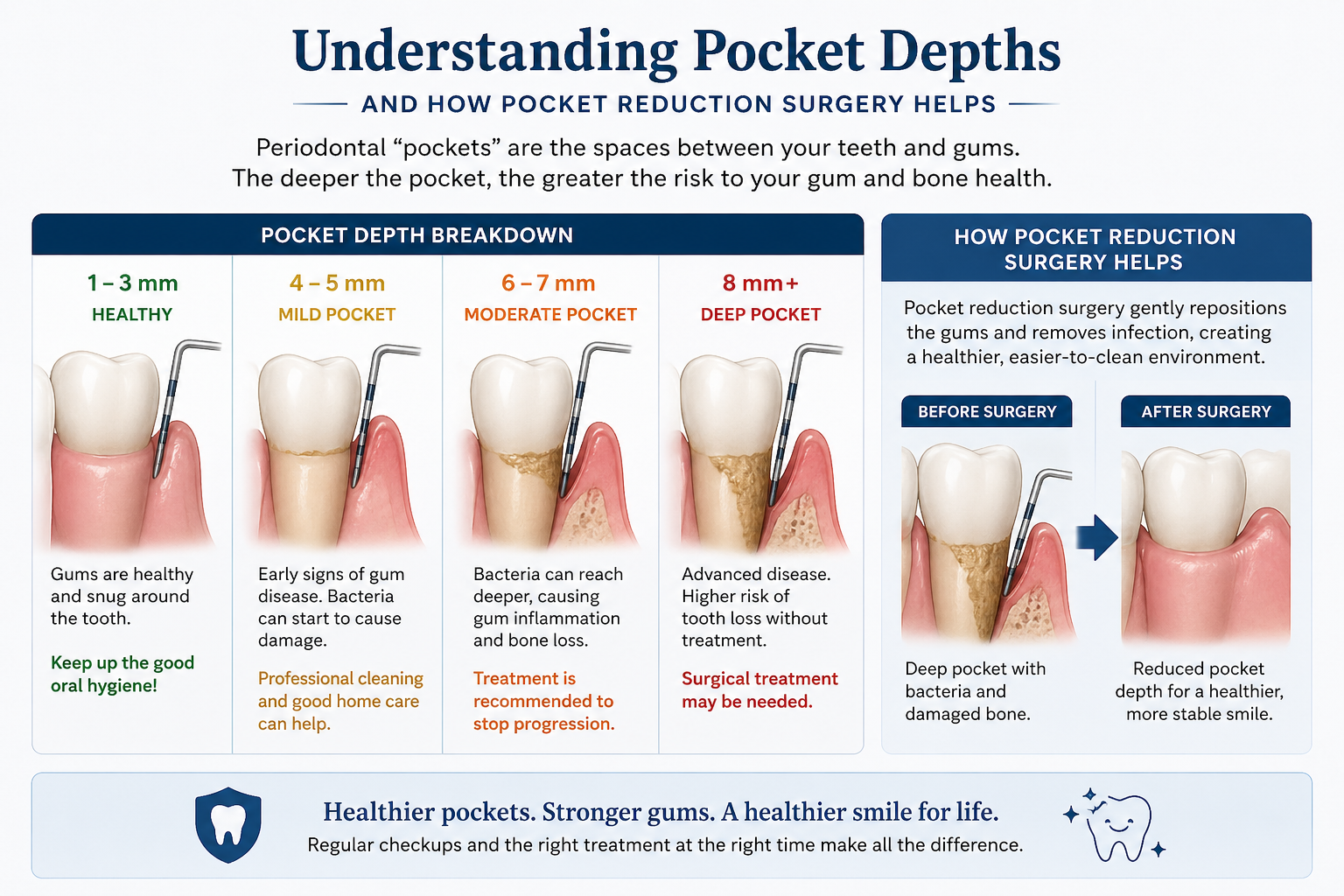
Here’s how to interpret what you’re hearing during your exam:
1–3 mm: Healthy Range
- Gums are snug around the tooth
- No significant inflammation or bone loss
- Easy to maintain with brushing, flossing, and routine cleanings
4 mm: Early Warning Zone
- Slight deepening of the pocket
- May indicate early gum inflammation (gingivitis) or mild periodontal changes
- Often manageable with improved hygiene and possibly Scaling & Root Planing
5–6 mm: Moderate Periodontal Disease
- Bacteria have moved deeper below the gumline
- Bone loss may be starting or progressing
- Professional intervention is typically recommended
7 mm and above: Advanced Periodontal Disease
- Significant breakdown of bone and supporting tissue
- Higher risk for tooth mobility or loss
- Advanced periodontal therapies are often required
Why Do Deeper Pockets Matter?
It’s Not Just About the Number—It’s About Access
The deeper the pocket, the harder it is to keep clean.
In shallow pockets (1–3 mm), your toothbrush and floss can effectively remove plaque. But once pockets deepen:
- Bacteria can accumulate beyond your reach
- Toxins begin to irritate and damage surrounding tissue
- The body’s inflammatory response can accelerate bone loss
This is why periodontal disease is often described as “silent”—you may not feel pain, but damage can still be progressing beneath the surface.
Why Was My Hygienist Calling Out So Many Numbers?
Full-Mouth Charting Explained
Each tooth is measured in six different locations:
- Three on the front (facial side)
- Three on the back (lingual side)
That’s why you might hear a rapid sequence like:
“3-4-5… 2-3-3… 6-6-5…”
This comprehensive mapping allows your provider to:
- Identify localized problem areas
- Track changes over time
- Customize your treatment plan with precision
What Causes Pockets to Get Deeper?
The Role of Bacteria and Inflammation
Periodontal pockets deepen when plaque and bacteria accumulate below the gumline and trigger inflammation.
Common contributing factors include:
- Inconsistent brushing and flossing
- Missed dental cleanings
- Smoking or tobacco use
- Genetic predisposition
- Systemic conditions like diabetes
Over time, this inflammation can lead to:
- Gum tissue detachment
- Bone loss around teeth
- Increased pocket depth
Can Deep Pockets Be Reversed?
Repair vs. Regeneration
This is one of the most important questions patients ask—and the answer depends on the severity of the condition.
Early Stages (4–5 mm)
- Often managed with Scaling & Root Planing
- Bacterial reduction allows gums to reattach and tighten
Moderate to Advanced (5–7+ mm)
- May require more advanced care such as:
In some cases, modern periodontal techniques can do more than stop progression—they can actually rebuild lost support structures.
This is where working with a specialist like Dr. Ryan Kaye becomes essential.
How Pocket Depth Relates to Tooth Loss and Implants
Why These Numbers Matter Long-Term
Pocket depth isn’t just about your gums—it directly impacts:
- Tooth stability
- Bone health
- Future treatment options
If periodontal disease progresses unchecked:
- Teeth may become loose
- Bone may deteriorate to the point where implants require Bone Grafting before placement
On the other hand, early intervention helps preserve:
- Your natural teeth
- Your bone structure
- Your eligibility for procedures like Dental Implant Therapy or All-On-X / Full-Arch Implants
What Happens After a “High Number” Is Found?
Your Next Steps, Explained Clearly
Hearing a “5” or “6” doesn’t mean something is wrong beyond repair. It means you’ve identified an area that needs attention.
At Bucks County Periodontics, your care is always personalized, but typical next steps may include:
1. Comprehensive Periodontal Evaluation
A deeper assessment of your gum health, bone levels, and risk factors.
2. Targeted Treatment Plan
This may include:
- Scaling & Root Planing
- Localized antimicrobial therapy
- Surgical or regenerative procedures if needed
3. Ongoing Periodontal Maintenance
More frequent cleanings to stabilize your condition and prevent progression.
You can learn more about this on our Periodontal Maintenance and Periodontal Disease Therapy pages.
Why a Periodontist Is the “Translator” You Need
Specialized Expertise Makes a Difference
General dentists and hygienists are excellent at identifying pocket depth changes—but a periodontist is trained to:
- Diagnose the cause of those changes
- Interpret what those numbers mean for your long-term health
- Offer advanced solutions to stabilize or rebuild your foundation
Dr. Ryan Kaye works closely with patients to:
- Break down complex findings into clear, understandable terms
- Recommend appropriate, evidence-based treatments
- Create a plan that aligns with your goals and comfort level
If you’ve ever left an appointment feeling unsure about what those numbers meant, you’re not alone—and you don’t have to stay in that uncertainty.
Frequently Asked Questions About Pocket Depth
“Is a 5mm pocket always bad?”
Not necessarily—but it does indicate a need for attention. With the right care, it can often be stabilized or improved.
“Can brushing fix deep pockets?”
Brushing is essential, but once pockets deepen beyond 4mm, professional treatment is typically required.
“Do deeper pockets always mean surgery?”
No. Many cases can be managed non-surgically, especially when caught early.
“How often should pocket depth be measured?”
At least once per year, or more frequently if you are in periodontal maintenance care.
How to Protect Your Gum Health Moving Forward
Practical, Actionable Steps
- Maintain consistent brushing and flossing habits
- Keep up with regular dental visits
- Follow through with recommended periodontal care
- Ask questions—understanding your numbers is part of your health
If you’ve recently heard unfamiliar numbers during your visit, the most important step is simple: get clarity.
A Final Word: Turning Numbers Into Confidence
Those numbers you hear during your dental visit aren’t something to fear—they’re something to understand.
They provide early insight into your gum health and give you the opportunity to act before problems progress. With the right guidance, they become less about uncertainty and more about control.
Schedule a Consultation at Bucks County Periodontics
If you’ve recently been told you have “4s,” “5s,” or “6s” and want a clearer understanding of what that means for your health, we’re here to help.
At our Bensalem and Richboro locations, Dr. Ryan Kaye and our team provide:
- Thoughtful, personalized evaluations
- Advanced periodontal care and regenerative solutions
- A supportive, patient-first experience focused on long-term outcomes
Whether you’re exploring preventive care, addressing active gum disease, or considering treatments like Gum Graft Surgery, Guided Bone & Tissue Regeneration, or Dental Implant Therapy, we’ll walk you through every step with clarity and care.
Schedule your consultation today and take the next step toward confident, informed oral health.

Osseous Surgery Demystified: What Actually Happens?
The word “osseous” sounds intimidating, but the procedure is actually one of the most routine and successful ways to stop bone loss. Think of it as a “reset button” for your smile. We’re walking you through exactly what happens in the chair at Bucks County Periodontics—no jargon, just facts.
If you’ve recently been told you may need osseous surgery, you’re not alone in feeling uncertain. Most patients arrive with two core questions: What exactly is this? and What is going to happen to me during the procedure?
This guide is designed to answer both—clearly, calmly, and transparently.
By the end of this article, you’ll understand:
- What osseous surgery actually treats (and why it matters)
- What happens step-by-step during the procedure
- How modern periodontal techniques make the experience precise and predictable
- What recovery looks like and how to prepare
- How this treatment protects your long-term oral health and even future dental implants
At our Bensalem and Richboro offices, care is always personalized. But the more you understand going in, the more confident and comfortable you’ll feel.
https://www.youtube.com/watch?v=BisBSk3xSYs
What Is Osseous Surgery (and Why Is It Recommended)?
Osseous surgery—also known as pocket reduction surgery—is a specialized periodontal procedure used to treat advanced gum disease (periodontitis).
To understand why it’s necessary, we need to zoom in slightly on what’s happening beneath the surface.
The Problem: Deep Periodontal Pockets
Healthy gums fit snugly around your teeth, with shallow spaces (called “pockets”) that are easy to clean with brushing and flossing.
When gum disease progresses:
- Bacteria move below the gumline
- The supporting bone begins to break down
- Pockets deepen (often 5mm, 6mm, or more)
- These spaces become impossible to clean at home
Even with professional treatments like Scaling & Root Planing, some areas may remain too deep or irregular to stabilize.
The Solution: Reset the Environment
Osseous surgery addresses this by:
- Removing bacteria and diseased tissue
- Reshaping the underlying bone
- Reducing pocket depth so the area can be maintained long-term
Think of it less as “surgery” and more as restoring a healthy, cleanable architecture for your gums.
This is often a critical step before or alongside treatments like:
- Periodontal Disease Therapy
- Guided Bone & Tissue Regeneration
- Dental Implant Therapy
- Periodontal Maintenance
Who Benefits from Osseous Surgery?
Not every patient with gum disease needs osseous surgery—but for the right cases, it’s one of the most effective interventions available.
You may be a candidate if:
- You have moderate to advanced periodontitis
- Pocket depths remain deep after non-surgical treatment
- There is bone loss affecting tooth stability
- You want to preserve your natural teeth for as long as possible
- You are preparing for Dental Implant Therapy or other restorative work
At Bucks County Periodontics, Dr. Ryan Kaye evaluates each case individually, using detailed measurements, imaging, and clinical experience to determine the most appropriate path forward.
What Actually Happens During Osseous Surgery?
This is where transparency matters most.
Let’s walk through the procedure step-by-step so you know exactly what to expect.
Step 1: Local Anesthesia (You’re Comfortable from the Start)
Before anything begins, the area is thoroughly numbed using local anesthesia.
You’ll be awake, but you won’t feel pain—only light pressure or movement.
For many patients, this is one of the biggest relief points:
the procedure is far more comfortable than they anticipated.
Step 2: Gentle Access to the Root and Bone
A small, precise opening is made in the gum tissue to allow access to:
- The tooth roots
- The underlying bone structure
This step is not about “cutting”—it’s about creating visibility and access so the area can be properly treated.
Step 3: Deep Cleaning Below the Gumline
Once access is established, Dr. Ryan Kaye removes:
- Bacterial deposits
- Tartar (calculus)
- Diseased tissue
This cleaning goes far deeper than what’s possible during a routine or even deep cleaning.
The goal is to completely eliminate the bacterial environment driving the disease.
Step 4: Bone Reshaping (The “Osseous” Component)
Here’s the defining part of the procedure.
When gum disease damages bone, it often creates:
- Irregular surfaces
- Craters or uneven contours
These irregularities trap bacteria and make healing difficult.
During osseous surgery:
- The bone is carefully reshaped
- Smooth, natural contours are restored
- Areas prone to bacterial buildup are eliminated
This step is done with high precision and is what allows the gums to reattach more effectively.
Step 5: Optional Regenerative Enhancements
In some cases, additional techniques may be used to rebuild lost structures, such as:
- Bone grafting materials
- Membranes used in Guided Bone & Tissue Regeneration
This is where modern periodontics becomes especially advanced—supporting your body’s ability to regenerate lost tissue, not just stabilize it.
Step 6: Repositioning the Gums
Once the area is clean and properly shaped:
- The gum tissue is repositioned snugly around the teeth
- Sutures (stitches) are placed to support healing
This reduces pocket depth and creates a healthier seal around the tooth.
Step 7: Healing Begins Immediately
The body begins healing right away:
- Inflammation decreases
- Tissue begins to reattach
- The environment becomes easier to maintain
What Makes Modern Osseous Surgery Different?
Many patients carry outdated assumptions about dental surgery. Today’s approach is far more refined.
Precision Over Force
Modern periodontal techniques focus on:
- Conservative tissue handling
- Microscopic precision
- Targeted intervention
This leads to:
- Less trauma to surrounding tissue
- Faster healing
- More predictable outcomes
Technology-Driven Planning
At Bucks County Periodontics, diagnosis and planning often involve:
- Detailed periodontal charting
- Advanced imaging
- Case-specific treatment mapping
This ensures that treatment is:
- Strategic
- Efficient
- Tailored to your exact anatomy
Integration with Long-Term Care
Osseous surgery is not a standalone event—it’s part of a larger system that may include:
- Periodontal Maintenance
- Gum Graft Surgery
- Bone Grafting
- All-On-X / Full-Arch Implants
The goal is always continuity:
treat the disease, stabilize the environment, and protect your long-term outcome.
What Does Recovery Feel Like?
One of the most common concerns is recovery—and in most cases, it’s more manageable than expected.
Immediately After the Procedure
You can expect:
- Mild swelling
- Minor bleeding
- A feeling of tenderness in the treated area
Most patients describe it as similar to having dental work done, not a major surgical event.
The First Few Days
During the initial healing phase:
- Soft foods are recommended
- Gentle oral hygiene techniques are introduced
- Any discomfort is typically manageable with prescribed or over-the-counter medication
You’ll receive detailed aftercare instructions tailored to your case.
One to Two Weeks
Within 7–14 days:
- Sutures may be removed (if non-dissolving)
- Tissue begins to look and feel more normal
- Daily routines become easier to resume
Long-Term Healing
Over time:
- Gum tissue stabilizes
- Pocket depths remain reduced
- Maintenance becomes significantly easier
This is where the real benefit shows up:
a healthier baseline that you can actually sustain.
How to Prepare for Osseous Surgery
Preparation doesn’t need to be complicated—but a few simple steps make a big difference.
Before Your Appointment
- Eat a normal meal (unless instructed otherwise)
- Plan for a low-key day afterward
- Arrange transportation if sedation is used
- Ask questions—clarity reduces stress
Set Yourself Up for Recovery
Have these ready at home:
- Soft foods (yogurt, eggs, smoothies, soups)
- A soft-bristled toothbrush
- Any prescribed rinses or medications
Follow the Plan
The most important factor in recovery is following your post-operative instructions carefully.
This includes:
- Oral hygiene modifications
- Dietary guidelines
- Attending follow-up visits
Why Osseous Surgery Matters Long-Term
It’s easy to focus on the procedure itself—but the real value is what happens afterward.
1. It Stops Disease Progression
By removing bacteria and reducing pockets, the cycle of:
- Infection
- Inflammation
- Bone loss
is interrupted.
2. It Helps Preserve Natural Teeth
Without intervention, advanced gum disease often leads to tooth loss.
Osseous surgery provides a path to:
- Stabilize the teeth you have
- Extend their lifespan significantly
3. It Creates a Maintainable Environment
After treatment:
- Brushing and flossing become effective again
- Professional cleanings are more impactful
- Recurrence risk is reduced with proper care
4. It Supports Future Treatment Options
If you ever need restorative care—such as:
A healthy periodontal foundation is essential.
Common Questions Patients Ask
“Is this my only option?”
Not always—but when osseous surgery is recommended, it’s typically because:
- Non-surgical options are no longer sufficient
- The goal is to preserve teeth and bone long-term
“Will my gums look different?”
In some cases, gums may appear slightly lower due to reduced swelling and pocket depth—but this reflects health, not loss.
“How successful is it?”
Osseous surgery has a strong track record when:
- Properly diagnosed
- Skillfully performed
- Followed by consistent maintenance
“What happens if I wait?”
Delaying treatment can allow:
- Further bone loss
- Increased mobility of teeth
- More complex future treatment needs
Early intervention often means simpler, more predictable care.
A Personalized Approach at Bucks County Periodontics
No two cases are identical.
At Bucks County Periodontics, treatment planning is always individualized based on:
- Clinical findings
- Patient goals
- Long-term oral health strategy
Whether your care plan includes:
- Scaling & Root Planing
- Periodontal Disease Therapy
- Guided Bone & Tissue Regeneration
- Or surgical intervention like osseous surgery
The focus remains the same:
clarity, precision, and sustainable results.
You can also explore more about the practice, philosophy, and team on the homepage and Meet the Team pages, as well as review insurance and financial options to plan confidently.
The Takeaway: Clarity Reduces Fear
When you understand what’s happening, the unknown becomes manageable.
Osseous surgery is not about “drastic intervention”—it’s about:
- Restoring a healthy foundation
- Giving your gums and bone a chance to stabilize
- Creating an environment you can maintain for years to come
It’s a precise, structured, and highly effective procedure designed to protect your long-term oral health.
Ready to Take the Next Step?
If you’ve been referred for osseous surgery—or you’re still evaluating your options—the best next step is a personalized consultation.
At Bucks County Periodontics, Dr. Ryan Kaye provides advanced periodontal care with a focus on clarity, comfort, and long-term results.
We welcome you to schedule a visit at either our Bensalem or Richboro office, where you’ll receive:
- A thorough evaluation
- Clear, honest recommendations
- A treatment plan tailored specifically to you
Your oral health is a long-term investment—and you deserve a partner who helps you understand every step along the way.

Can I Reverse Deep Pockets Without Surgery? (When to Call a Pro)
It’s the question everyone asks: “Can’t I just brush and floss my way out of this?” While early-stage gingivitis is reversible, deep periodontal pockets are like a splinter deep under the skin—you can’t clean what you can’t reach. Here is how to tell if your gums need a deep cleaning or the specialized care of a periodontist.
If you’ve recently heard numbers like “5,” “6,” or higher during a dental exam, you’re not alone in wondering what comes next—and whether you can fix it on your own.
This article will give you a clear, honest answer.
You’ll learn:
- What periodontal pockets actually are—and why they matter
- When home care and non-surgical treatment can work
- Where the “point of no return” begins
- What modern periodontal treatment looks like (and why it’s more approachable than you may think)
At Bucks County Periodontics, with care led by Dr. Ryan Kaye, the goal is always the same: preserve your natural teeth, support long-term oral health, and give you clarity—not confusion—about your options.
https://www.youtube.com/watch?v=k9_sduaEyP0
What Are “Deep Pockets” — And Why Do They Matter?
Understanding Pocket Depth in Simple Terms
Healthy gums fit snugly around your teeth, creating a shallow space (called a “pocket”) that measures about 1–3 millimeters.
When gum disease begins, bacteria accumulate below the gumline. Over time:
- The gums pull away from the teeth
- The pocket deepens
- Bacteria move further below the surface
- Bone supporting the teeth begins to break down
This is how you get 4mm, 5mm, 6mm+ pockets.
Why Deeper Isn’t Better
A deeper pocket isn’t just a number—it’s a signal:
- 4mm: Early concern, still manageable
- 5–6mm: Moderate disease, harder to clean
- 7mm+: Advanced disease, often beyond non-surgical care
The deeper the pocket, the more protected harmful bacteria become—and the harder it is for both you and your dentist to remove them.
Can You Reverse Gum Disease at Home?
The Honest Answer: It Depends on the Stage
Let’s be direct—because this is where many patients get mixed messages online.
Yes — Early Gingivitis Can Be Reversed
If your condition is limited to gingivitis (no bone loss yet):
- Consistent brushing and flossing
- Professional cleanings
- Antibacterial rinses
…can restore gum health.
At this stage, the damage is superficial and reversible.
No — Deep Periodontal Pockets Cannot Be Fully Reversed at Home
Once pockets deepen and bone loss begins:
- The disease moves below the gumline
- Bacteria colonize areas your toothbrush cannot reach
- Inflammation becomes chronic
At this point, home care alone is not enough.
You can slow progression, but you cannot:
- Eliminate deep bacterial deposits
- Reattach gum tissue
- Regrow lost bone without intervention
The Key Distinction
Think of it this way:
- Gingivitis = surface-level issue → reversible
- Periodontitis = structural issue → requires professional care
Why You “Can’t Clean What You Can’t Reach”
The Splinter Analogy
A deep periodontal pocket functions like a splinter buried under your skin:
- You can clean the surface all you want
- But the source of irritation remains underneath
Until that “splinter” (bacteria and infected tissue) is removed:
- Inflammation continues
- Bone loss progresses
- The pocket deepens further
What’s Happening Below the Gumline
Inside a deep pocket:
- Bacteria form a biofilm (a highly resistant layer)
- Toxins break down connective tissue
- The immune system responds—causing collateral damage to bone
This is why untreated periodontal disease can eventually impact:
- Tooth stability
- Bite alignment
- Even candidacy for procedures like Dental Implant Therapy
Do “Natural Remedies,” Special Toothpastes, or Lasers Work?
Let’s Break It Down Clearly
Patients often search for alternatives before seeing a specialist. That’s completely understandable—and worth addressing honestly.
Special Toothpastes & Mouthwashes
What they can do:
- Reduce surface bacteria
- Support gum health
- Help maintain results after treatment
What they cannot do:
- Reach deep pockets
- Remove hardened calculus (tartar)
- Reverse bone loss
Oil Pulling, Saltwater Rinses, and Natural Approaches
These can:
- Support general oral hygiene
- Reduce mild inflammation
But they do not replace clinical treatment for moderate or advanced disease.
Laser Therapy
This is where nuance matters.
Laser-assisted periodontal therapy:
- Can be a helpful adjunct in treatment
- May reduce bacteria and inflammation
However:
- It is not a standalone cure for deep pockets
- It is often used alongside scaling, root planing, or surgery
The Bottom Line
These options are supportive—not curative—for deep periodontal pockets.
The First Line of Defense: Scaling & Root Planing
What Is a “Deep Cleaning”?
Before jumping to surgery, most patients start with Scaling & Root Planing—a non-surgical treatment available at Bucks County Periodontics.
This procedure:
- Removes plaque and tartar below the gumline
- Smooths root surfaces to discourage bacteria
- Allows gum tissue to begin reattaching
Who Benefits Most?
Scaling & Root Planing is often effective for:
- 4–5mm pockets
- Early to moderate periodontitis
- Patients with minimal bone loss
What Results Can You Expect?
After treatment:
- Inflammation decreases
- Gums tighten slightly
- Pocket depths may reduce
But—and this is critical—
It does not regenerate lost bone or tissue.
When Deep Cleaning Isn’t Enough
The “Point of No Return”
There is a clinical threshold where non-surgical care becomes insufficient.
You may be in this category if you have:
- 6mm+ pockets that persist after deep cleaning
- Evidence of bone loss on X-rays
- Loose or shifting teeth
- Chronic inflammation or bleeding
At this stage, the goal shifts from managing disease to actively correcting the underlying damage.
What Happens If You Delay Treatment?
This is where clarity matters—not fear.
Untreated deep pockets can lead to:
- Progressive bone loss
- Tooth mobility
- Eventual tooth loss
This doesn’t happen overnight—but it does happen predictably over time.
The longer bacteria remain below the gumline, the more structural support is lost.
Modern Periodontal Solutions (And Why They’re More Advanced Than You Think)
Surgical Treatment Isn’t What It Used to Be
When patients hear “surgery,” they often imagine something invasive and overwhelming.
Modern periodontal care is:
- Precise
- Targeted
- Focused on preserving your natural teeth
Common Advanced Treatments
Periodontal Disease Therapy (Pocket Reduction)
This approach:
- Provides direct access to deep pockets
- Removes bacteria thoroughly
- Reduces pocket depth for easier maintenance
Guided Bone & Tissue Regeneration
For patients with bone loss, this advanced procedure:
- Encourages the body to rebuild lost bone
- Uses biologically compatible materials
- Helps stabilize teeth long-term
You can explore more about this approach on the Guided Bone & Tissue Regeneration service page.
Bone Grafting
When bone loss affects tooth support or implant readiness:
- Bone grafting restores structural foundation
- Creates a stable base for future treatments
This is especially relevant for patients considering Dental Implant Therapy or All-On-X / Full-Arch Implants.
Gum Graft Surgery
If gum recession is present:
- Gum grafting restores coverage
- Protects exposed roots
- Improves both function and aesthetics
Learn more through the Gum Graft Surgery service page.
Can Deep Pockets Ever Fully “Go Away”?
The Realistic Goal
The goal of treatment is not always to return to perfect 1–3mm pockets.
Instead, the focus is:
- Reducing pocket depth to manageable levels
- Eliminating active infection
- Preserving teeth and bone
What Success Looks Like
After proper treatment:
- Pockets may reduce to 3–4mm
- Inflammation is controlled
- Maintenance becomes predictable
At this stage, ongoing care through Periodontal Maintenance becomes essential.
What Happens After Treatment?
Maintenance Is Everything
Even after successful treatment, periodontal disease requires ongoing care.
This includes:
- Regular periodontal maintenance visits
- Consistent home hygiene
- Monitoring for recurrence
Think of it as managing a chronic condition—similar to high blood pressure or diabetes.
How to Know When It’s Time to Call a Specialist
Signs You Should See a Periodontist
You don’t need to guess.
If you’ve experienced:
- Being told you have 5mm+ pockets
- Bleeding gums that don’t improve
- Gum recession or sensitivity
- Loose or shifting teeth
- A recommendation for “deep cleaning” that didn’t resolve the issue
…it’s time for a more specialized evaluation.
Why a Periodontist Matters
A general dentist plays an essential role in early detection.
A periodontist like Dr. Ryan Kaye specializes in:
- Advanced gum disease treatment
- Regenerative procedures
- Long-term preservation of natural teeth
At Bucks County Periodontics, patients are evaluated individually at both the Bensalem and Richboro locations—because no two cases are the same.
A Clear, Honest Framework to Remember
If you take one thing away from this article, let it be this:
- You can prevent and manage early gum disease at home
- You cannot reverse deep periodontal pockets without professional care
- The earlier you act, the simpler the solution tends to be
Your Next Step: Clarity, Not Guesswork
If you’ve been told you have deep pockets—or you’re unsure what your numbers mean—the best next step is a personalized evaluation.
At Bucks County Periodontics, you’ll receive:
- A clear diagnosis
- A thoughtful explanation of your options
- A treatment plan designed around your long-term health—not just short-term fixes
Schedule a Consultation
Your gums are the foundation of your entire smile—and your overall oral health.
Whether you need preventive care, Scaling & Root Planing, or advanced therapies like Bone Grafting or Guided Bone & Tissue Regeneration, the right care at the right time can make all the difference.
We invite you to schedule a consultation at our Bensalem or Richboro office to take the next step with confidence.
Explore additional resources:
- Learn more about our approach on the About / Meet the Team page
- Review treatment options like Periodontal Disease Therapy and Dental Implant Therapy
- Visit our Insurance & Financial page to understand your options
Healthy gums don’t happen by chance—they happen with the right care, at the right time.